












Disclaimer: Consult a licensed electrician for questions regarding your home’s circuitry, and be sure to refer to building codes before undertaking electrical work, as regulations may vary by location.
Some smart switches require a neutral wire for proper operation, a crucial component in the electrical wiring of homes and buildings. Without a neutral wire, your smart switch options might be limited, or you may need additional wiring modifications. For many homeowners, identifying this component can feel like navigating a maze. This article will clarify what the neutral wire does, help you determine if you have one, and offer solutions if you don’t.

Understanding the Neutral Wire
The neutral wire, often referred to simply as “neutral,” is a fundamental component in electrical wiring systems, particularly in alternating current (AC) circuits. In a typical household electrical system, power is distributed through electrical wires forming a circuit. The neutral wire provides a return path for the current flowing from the load (such as lights, appliances, or outlets) back to the power source, usually the electrical panel. Devices such as outlets, switches, and light fixtures often require a neutral connection to function correctly. Therefore, identifying the presence of this wire is crucial for ensuring the safety and efficiency of electrical systems.
How to Determine If You Have a Neutral Wire
Safety First: Before inspecting or performing any electrical work, ensure the power is turned off at the main circuit breaker to prevent electric shock.
Opening the Electrical Box: Carefully remove the electrical box cover plate where you intend to inspect the wiring.
Identifying the Neutral Wire:
● Color Codes: In the United States and many other countries, the neutral wire is typically white or gray, while the live wire is usually black or red, and the ground wire is green or bare copper.
● Older Wiring: In older homes, wiring color codes may not be consistent.
Note: Wiring practices and color codes vary by country. If you encounter any uncertainty or difficulty in identifying the neutral line, it’s advisable to consult a licensed electrician. Electrical systems can be hazardous, and professional electricians have the expertise to ensure that your electrical work is safe and compliant with local codes.

FAQ
Q. How can I check if my wall switch has a neutral wire?
A. The easiest way to check for a neutral wire is by removing the wall switch cover and looking at the wiring: white or gray wires are usually neutral wires, but it’s always best to use a voltage tester or consult an electrician to confirm. Newer homes (built after the 1980s) are more likely to have neutral wires, while older homes may not.
Q. Can I install a smart switch without a neutral wire?
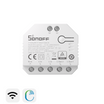
A. Yes, if your home does not have a neutral wire, you can still install a smart switch by choosing a model that does not require one, such as the SONOFF ZBMINIL2. This Zigbee smart switch works without a neutral wire and is compatible with smart home ecosystems like Alexa and Home Assistant.
Q. What are the alternatives if I don’t have a neutral wire?
A. 1. Use a no-neutral smart switch like the SONOFF ZBMINIL2 and MINI-ZB2GS-L which is designed for homes without a neutral wire. It requires a Zigbee hub to work (compatible with SONOFF ZBBridge-P, ZBDongle-P, ZBDongle-E, iHost, NSPanel Pro, Amazon Alexa Echo, and SmartThings Hub).
2. Use smart bulbs, which allow remote control without replacing your existing wall switch, like SONOFF B02-F, B02-BL/B05-BL.
Q. Does every home need a neutral wire for smart switches?
A. No, not all homes need a neutral wire to install smart switches. Many newer smart switches work without a neutral wire, making them suitable for older homes. Always check your wiring before purchasing a smart switch to ensure compatibility.

Leave a comment
All comments are moderated before being published.
This site is protected by hCaptcha and the hCaptcha Privacy Policy and Terms of Service apply.