










Introduction
A water heater leak can start slowly and remain unnoticed until water has already spread around the unit. This is especially easy to miss when the heater is installed in a basement, garage, utility room, or closet.
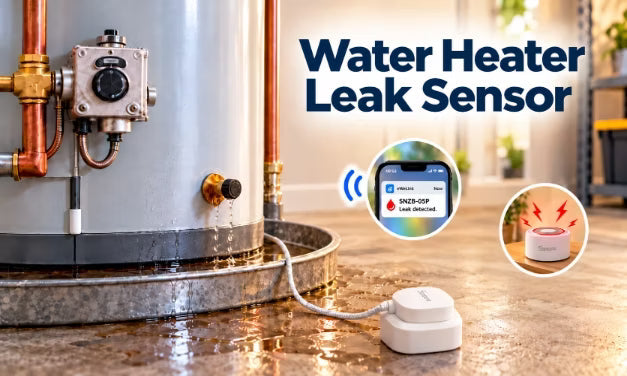
A water heater leak sensor provides earlier warning by detecting water near the heater and triggering an alarm, notification, or smart home automation.
Where the sensor is placed matters because it can only detect water that reaches its sensing area. This guide explains how water heater leak sensors work, where to place one, how much coverage you may need, and what to look for when choosing a sensor.
How Does a Water Heater Leak Sensor Work?
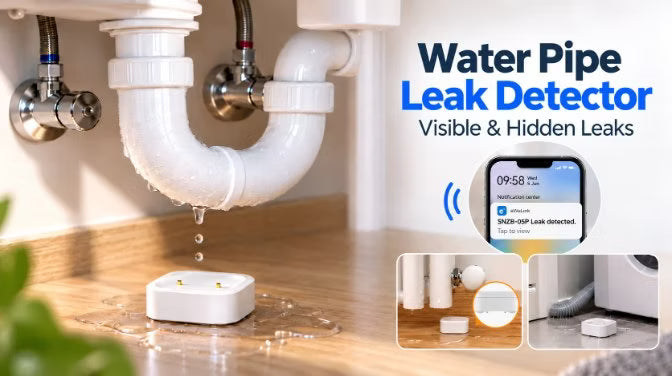
Many water heater leak sensors use metal probes, sensing contacts, or a water detection cable. When water reaches the sensing area, the device changes to a leak state and triggers the configured alert.
Depending on the system, this may include:
- an audible alarm from the sensor or connected hub;
- a phone notification; or
- a smart home automation.
A leak sensor normally detects water and sends an alert; it does not shut off the water by itself. Automatic shutoff requires a compatible valve or other shutoff device connected through the system.
Where Should You Place a Water Heater Leak Sensor?
Place the sensor where leaking water is most likely to collect or pass first.
Before choosing a spot, check the drain pan, floor slope, tank base, and nearby pipe connections. The goal is to place the sensor in the path water is most likely to take, rather than simply putting it next to the heater.
Inside the Water Heater Drain Pan
If the heater sits in a drain pan, place the sensor at an accessible low point where water is likely to collect.
Keep it clear of the drain opening and any area needed for servicing the heater. If there is not enough room for a point sensor, a detection cable may fit more easily inside the pan.
On the Floor Beside the Water Heater
If there is no drain pan, place the sensor on the floor near the heater where water is most likely to collect.
Pay attention to the floor slope. A sensor at the front of the heater may stay dry if water naturally runs toward the back or another low point.
Along the Likely Leak Path
If one small sensing point may not cover the likely water path, use a detection cable or additional sensors to extend coverage around the heater or drain pan.
Keep sensors and cables clear of drain openings and service areas.
Is One Water Heater Leak Sensor Enough?
One sensor may be enough if leaks from the likely sources will reach the same drain pan, low point, or sensing area.
A point sensor only detects water that reaches its contacts, so one may not be enough if water can flow in different directions or collect in separate locations around the heater.
In that case, consider:
- adding another point sensor; or
- using a leak sensor with a detection cable to cover a longer leak path.
The number of sensors should follow the likely water paths and collection points, not simply the size of the room. The goal is to make sure a small leak is likely to reach a sensing area early.
What Should You Look for in a Water Heater Leak Detector?
For a water heater, focus on whether the detector can detect a small leak where water is likely to collect, alert you quickly, and remain reliable over time.
Sensitivity to Small Leaks
A water heater leak may start as slow dripping or a small amount of water around the tank or fittings. Choose a sensor that can respond to shallow water so it does not require a large puddle before triggering an alert.
Detection Coverage
Check how much of the likely leak area the sensor can monitor. Point sensors cover one location, while additional sensors or a detection cable can extend coverage where water may follow different paths.
Do not confuse wireless range with leak detection coverage. A sensor can have a strong connection to its hub while monitoring only a small area of the floor.
Local and Remote Leak Alerts
Consider how you need to be warned both at home and away. A built-in siren or connected alarm can provide a local warning, while a smart leak detector can send phone notifications through its app or smart home platform.
For connected sensors, also check what happens if the internet goes down. Some systems can still run local alarms or automations even when remote notifications are unavailable.
Reliable Connection
Water heaters are often installed in basements, garages, or utility rooms where wireless coverage may be weaker.
After installation, confirm that the sensor stays connected and reports normally from its final location. Distance, walls, and nearby equipment can affect reliability, depending on the wireless technology used.
Power and Maintenance
Check how the sensor is powered and what ongoing maintenance it requires.
For battery-powered sensors, look for battery-level reporting or low-battery alerts, so you know when the battery needs attention. Externally powered sensors avoid battery replacement, but they require a suitable power source and cable placement, and may be affected by a power outage.
Whatever the power source, test the sensor periodically and confirm that it is still online and able to send alerts.
Smart Home Compatibility and Automation
If you want more than a standalone alarm, check whether the sensor works with your existing smart home platform and whether it needs an additional hub, bridge, or integration.
Once connected, a leak can trigger actions such as phone notifications, a siren, warning lights, or a compatible water shutoff device.
If automatic shutoff is important, confirm that the leak sensor and shutoff hardware can work together before choosing the system.
Using the SONOFF SNZB-05P as a Water Heater Leak Sensor
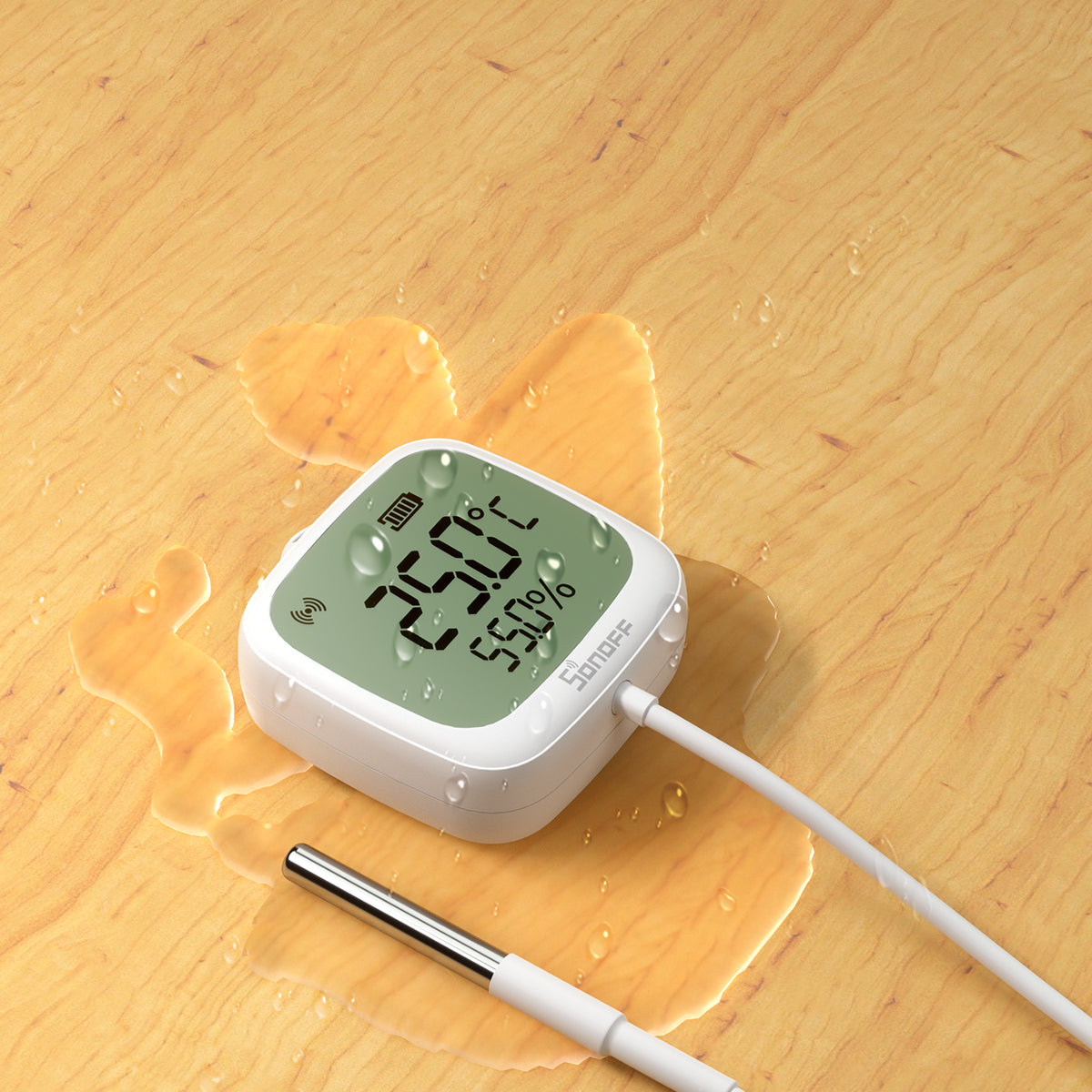
For water heater leak monitoring, the SONOFF SNZB-05P can be placed at a likely collection point or paired with a detection cable for wider coverage.
- Early leak detection. The SNZB-05P's raised probes can detect liquid levels as low as 0.5 mm, so it does not require deep standing water before changing to a leak state. For a water heater, place it in a suitable drain pan, near the tank base, or at another likely collection point.
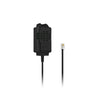
- Wider coverage with a detection cable. If one detection point does not cover enough of the area around the heater, the optional Water Leak Detection Cable can be routed through part of the drain pan or along a likely leak path. Multiple cables can also be connected in series for a longer detection path.
- Multiple ways to receive leak alerts. With a compatible SONOFF Zigbee gateway and eWeLink setup, the SNZB-05P can send app notifications or trigger a supported gateway alarm through a configured smart scene. With firmware 1.0.2 or later, it can resend a leak alert every 10 minutes while water remains detected. Email or SMS alerts can also be added through IFTTT. For a stronger in-home warning, a compatible Zigbee siren such as the SONOFF SNZB-09P can also be triggered via a configured smart scene.
- Smart home integration. The SNZB-05P uses Zigbee 3.0 and requires a compatible Zigbee hub or coordinator. Home Assistant users can add it through ZHA or Zigbee2MQTT and use its wet/dry state in notifications and automations. The sensor itself is not a native Matter device, but compatible SONOFF Matter Bridges such as the ZBBridge-U and Bridge-M can expose it to supported Matter ecosystems such as Apple Home, Google Home, and Alexa.
👉 See our Home Assistant Water Leak Sensor Setup Guide for setup instructions.
- Battery life and water resistance. The sensor uses a CR2477 battery and is rated for up to about five years of battery life under SONOFF's test conditions. Its IP67-rated enclosure provides protection against dust and temporary water exposure.
Note: The SNZB-05P detects water and can trigger alerts or automations, but it does not close the water supply by itself. Automatic shutoff requires compatible valve hardware and a configured automation.
What Should You Do When a Water Heater Leak Sensor Goes Off?
Do not ignore the alert. Check the drain pan, tank base, pipe connections, valves, and surrounding floor to see whether water is still leaking or spreading.
- If you are home: inspect the area and identify the likely source without touching electrical or hot components.
- If you are away: use any configured remote shutoff if available, or ask someone to check the property if the alert appears urgent.
For an active leak, stop the incoming water supply if you can do so safely and follow the water-heater manufacturer's shutdown instructions. If you are unsure, contact a qualified plumber.
After the leak has been repaired, dry the sensor and any detection cable completely, then test the alarm, notification, or automation before returning the system to normal use.
FAQs
Q1: Can I put a leak sensor in a water heater drain pan?
Yes, if the sensor manufacturer's instructions allow it. A drain pan can be a useful location because leaking water may collect there before reaching the surrounding floor. Keep the sensor or detection cable clear of the drain opening and do not interfere with drainage or service access.
Q2: Can a water heater leak sensor detect a slow leak?
A slow leak can be detected if the water reaches the sensor's probes or detection cable. Sensors that respond to shallow water may detect the leak before a larger puddle forms, but placement is still critical. A drip outside the monitored area may go undetected until the water spreads.
Q3: Can a water heater leak sensor automatically shut off the water?
A leak sensor by itself usually detects water and sends an alert. Automatic shutoff requires a compatible valve or shutoff system connected through the sensor's platform or automation system. If automatic shutoff matters to you, confirm compatibility before choosing the sensor and valve.
Q4: Do water heater leak sensors need Wi-Fi?
Not all of them. Standalone leak alarms can work without Wi-Fi, while smart sensors may use Wi-Fi, Zigbee, Z-Wave, Thread, or another connection method. Remote phone alerts usually require an internet-connected app, hub, or smart home platform, even if the sensor itself uses Zigbee, Z-Wave, or Thread.
Q5: Why is my water heater leak sensor alarming when the floor looks dry?
A dry visible floor does not always mean the alert is false. Water may be inside the drain pan, under the sensor, or left from an earlier spill or condensation. Check the sensing area, drain pan, tank base, and nearby fittings before clearing the alert. If alarms continue without an obvious source, check the sensor placement and have the water heater inspected if necessary.
Q6: Can I use a water heater leak sensor with Home Assistant?
Yes, if the sensor has a supported integration. The SONOFF SNZB-05P, for example, works with Home Assistant through ZHA and Zigbee2MQTT when used with a compatible Zigbee coordinator.

Leave a comment
All comments are moderated before being published.
This site is protected by hCaptcha and the hCaptcha Privacy Policy and Terms of Service apply.