










Introduction
The smart home and IoT industry has evolved rapidly over the past decade, with cloud-centric architectures becoming the dominant model for device connectivity, control, and automation.
As smart devices become increasingly integrated into daily life, users and developers are beginning to demand a different paradigm — one that prioritizes local control, reduces dependency on the cloud, and enables true interoperability across ecosystems.
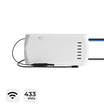
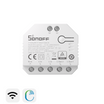
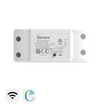
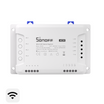
To meet the growing demand for greater local control, seamless interoperability, and flexible integration, SONOFF introduces OpenEdge, a new architecture framework designed to bring intelligence, control, and integration directly to the device edge.
More Than the Cloud, Exploring a Local-First Approach
Cloud-centric architectures have proven remarkably effective at scale, enabling seamless remote access, OTA updates, and cross-device coordination for millions of users worldwide. However, as use cases diversify— privacy-sensitive environments and multi-platform households — many users and developers find themselves seeking additional architectural choices that complement, rather than replace, what the cloud already provides well. OpenEdge emerges as such a complementary option, offering local-first capabilities for scenarios where latency, data residency, or ecosystem independence matter most.
Privacy and Data Sovereignty ConsiderationsContinuous cloud connectivity inherently involves data transmission beyond the local network. For users who prefer to keep device state, usage patterns, and device data within their own premises—or who operate under regulatory constraints requiring data residency—a local-first architecture keeps all processing and storage on-site by default |
Ecosystem Flexibility ConsiderationsCloud platforms typically bind devices to their own ecosystems through proprietary protocols and account systems. While this delivers convenience within a single brand, it can complicate cross-vendor integration and long-term portability. An open, locally accessible API allows devices to participate in any ecosystem the user chooses—Home Assistant, Node-RED, or custom solutions—with no vendor lock-in. |


These considerations do not diminish the value of cloud architectures; rather, they highlight the opportunity for a complementary local-first approach that gives users and developers the freedom to choose the architecture that best fits each specific scenario.
What is OpenEdge
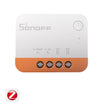
SONOFF offers OpenEdge — a self-hosted web configuration solution for compatible devices. For supported devices on your local network, simply open a browser, enter the device's IP address, and access a full configuration and control dashboard — no app, no account, no cloud required.
Each OpenEdge-enabled device includes an embedded web-based control interface accessible via a standard browser within the local network.
- Direct local access — Enter the device IP in any browser to open the console instantly.
- Full configuration — Wi-Fi setup, schedules, timers, device parameters—all manageable locally.
- Real-time status — Monitor device state, data readings, and connection info without cloud dependency.
- No account required — Use the device entirely offline; the cloud is optional, not mandatory.
- Works during internet outages — As long as your LAN is up, your devices respond.
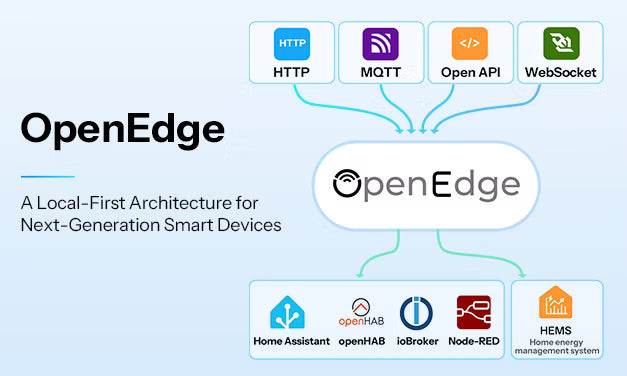
Beyond the web console, OpenEdge-enabled devices provide standardized local API interfaces that expose device functions to any authorized client on the network. This enables devices to maintain full local autonomy while becoming first-class citizens in third-party smart home ecosystems.
Local API — A unified JSON-RPC interface over the local network, supporting multiple communication transports while maintaining a consistent API model.
- HTTP — Stateless request/response for device control and status queries
- MQTT — Publish/subscribe messaging for event-driven automation and integrations
- WebSocket — Persistent, bidirectional communication with real-time state updates
The OpenEdge provides a responsive, intuitive interface for device settings, network configuration, scheduling, and real-time control. It works on desktop, tablet, or mobile—any device with a modern browser.
This design ensures consistent integration across third-party platforms while preserving device autonomy.
How It Fits Together
The OpenEdge architecture keeps the decision-making on the device and on your network. The cloud remains available as an optional enhancement—not a dependency.

Key Design Principles
1. Local-first by default. Devices can be fully configured and operated within a local network environment through a browser-based interface.
2. Cloud as an option, not a requirement. Users who want remote access, voice assistant integration, or smart scenes can enable cloud features—on their own terms.
3. Open, documented interfaces. The local API is standardized and publicly documented, empowering developers to build without reverse-engineering.
Cloud-Based Control vs OpenEdge Local Control
| Capability |
Cloud |
OpenEdge |
|
Connectivity |
Internet-enabled |
Local network (LAN) |
|
Access Method |
Mobile App |
Local Web Console (Browser) |
|
Data handling |
Processed via vendor cloud |
Kept within local network |
|
API |
Cloud API |
Standardized Local API |
|
Integration |
Cloud platforms |
Third-party platforms |
Use Cases
USE CASE 01
Privacy-First Smart Home
A household that wants full smart control without sending daily routines to the cloud configures every device through the local web console, keeping all data on the home network.
USE CASE 02
Home Assistant Power User
An advanced user integrates SONOFF devices into Home Assistant via the standardized local API, building complex automations with instant response and no cloud dependency.
USE CASE 03
Offline & Edge Deployments
In environments with unreliable or no internet—cabins, workshops, RVs—devices continue to operate and respond via the local network with zero downtime.
USE CASE 04
Custom Developer Projects
A developer builds a Node-RED flow or custom gateway that orchestrates multiple SONOFF devices via local API calls, creating a tailored smart experience.
USE CASE 05
Multi-Platform Households
A home using mixed platforms controls the same SONOFF devices from any ecosystem, avoiding hardware duplication and platform lock-in.
USE CASE 06
Security-Sensitive Installations
Small businesses and offices requiring air-gapped device management use local-only control to ensure operational data never leaves the premises.
Value Proposition
OpenEdge delivers value across three dimensions:
For Users
- Faster response times through local execution
- Improved reliability without cloud dependency
- Enhanced privacy through local data processing
For Developers
- Unified and standardized local API interfaces
- Reduced dependency on cloud SDKs and vendor lock-in
- Easier integration with existing automation frameworks
For the Ecosystem
- Breaks down platform silos
- Encourages cross-platform interoperability
- Enables a more open and decentralized smart device landscape
Future Vision
OpenEdge represents a shift toward a new paradigm in smart device architecture:
From:
Cloud-dependent, platform-locked devices
To:
Autonomous edge devices with open, standardized local intelligence
This transition enables a future where smart devices are no longer passive endpoints of cloud platforms, but active, intelligent nodes within a distributed ecosystem.
In this vision, the cloud becomes optional — serving as an enhancement layer rather than a dependency.

Leave a comment
All comments are moderated before being published.
This site is protected by hCaptcha and the hCaptcha Privacy Policy and Terms of Service apply.