










Introduction
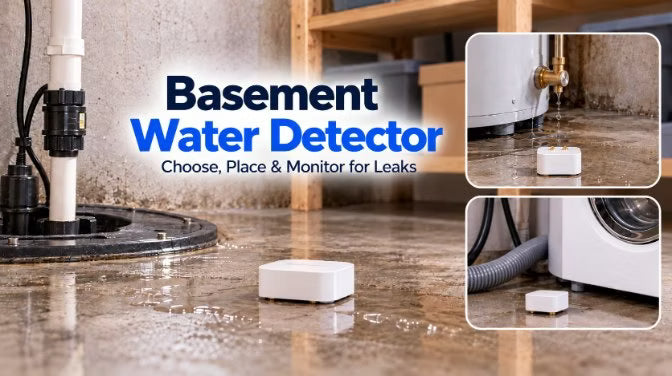
A basement water detector can warn you when water appears near a sump pump, water heater, washing machine, pipe connection, or other leak-prone area—before the leak spreads across the floor.
But one sensor does not automatically protect the entire basement. Most leak detectors only respond when water reaches their sensing area, while basement leaks can start in several separate locations and follow different paths across the floor.
The key is to identify your basement's main leak-risk zones first. From there, you can decide where to place individual sensors, whether a detection cable would provide better coverage, and how you want to receive an alert when water is detected.
What Type of Basement Water Detector Do You Need?
The right basement water detector depends on where water is likely to appear and how you want to be alerted. A water leak sensor works well for a specific leak-risk area, while a water detection cable can monitor a longer path. If you want to know about a leak while you are away from home, choose a smart water leak sensor that can send remote notifications through a compatible hub or smart home platform.
|
Type |
Best For |
What to Know |
|
Water Leak Sensor |
Sump pump areas, water heaters, washers, utility sinks |
Detects water when it reaches the sensing probes or sensing area, so placement is important. |
|
Water Detection Cable |
Foundation walls, exposed pipe runs, wider leak paths |
Extends detection along a longer path, but the cable still needs to come into contact with water. |
|
Smart Water Leak Sensor |
Remote basement monitoring |
Can send phone notifications or trigger smart home automations through a compatible hub or platform. |
|
Water Level Sensor / High-Water Alarm |
Monitoring rising water in a sump pit |
Designed to monitor water level inside the pit rather than detect water spreading across the basement floor. |
These options can also be combined. For example, you might use water leak sensors near a water heater and washing machine, a detection cable along a foundation wall, and a separate water level sensor or high-water alarm for the sump pit.
Best Places to Put Basement Water Detectors
Basement leaks do not always show up directly below the source. Water can run along a pipe, collect in a drain pan, or follow the slope of the floor, so place sensors where water is most likely to travel and collect.
Near the Sump Pump or Sump Pit
Place a sensor on the floor where an overflowing sump pit or leaking discharge connection would send water. If you also want to monitor rising water inside the pit, use a device intended for high-water detection rather than putting a normal floor sensor into the sump. Check-valve and discharge-pipe connections are worth including because they can leak even while the pump is running.
Around the Water Heater
Water heaters are common in basement utility rooms. Place the detector where water from the tank, valve, or plumbing connections would collect—inside a drain pan if one is fitted, or near the base if it is not.
Near a Basement Washer or Utility Sink
If your laundry area is in the basement, check the washer supply hoses, drain connection, utility sink, and standpipe. Put the sensor where a loose hose or overflowing drain would send water onto the floor, while keeping it accessible for testing.
Below Exposed Pipes and Valves
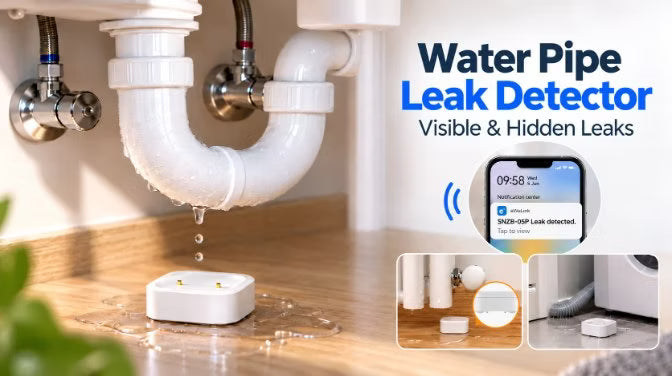
Basements often have exposed plumbing, making pipe joints, shutoff valves, filters, and supply connections practical places to monitor. Put the sensor below the likely drip path, keeping in mind that water may run along a pipe before reaching the floor.
Near HVAC or Dehumidifier Drainage
Condensate drains, pumps, and dehumidifier hoses can release water if they clog, disconnect, or fail. Place the sensor near the drain, pump, or equipment base where water is most likely to collect.
Near a Floor Drain or Known Low Point
If your basement has a floor drain, consider the area around it rather than placing a sensor directly over the drain opening. Water from several sources may flow toward the same low point, while a drain backup can also send water back onto the floor.
Along Foundation Walls and Known Seepage Areas
If water has entered along a foundation wall or wall-to-floor joint before, start there. Place the detector near the usual entry point or low area where water tends to collect.
Does One Basement Water Detector Cover the Whole Basement?
Usually not. Many basement water leak sensors detect water only when it reaches their sensing probes or sensing area.
Basement leaks often start in separate places. A sump pump, water heater, washer, and utility sink may all be in the same basement, but water from each one can travel in a different direction. A sensor placed in the middle of the room may not detect a small leak until the water spreads far enough to reach it.
A better approach is to think in risk zones rather than square footage. If several leak sources share the same low point or drain path, one sensor may cover more than one area. If they are separated by walls, thresholds, drain pans, or different floor slopes, they usually need separate monitoring.
For a small basement with only one or two leak-risk areas, one or two well-placed sensors may be enough. Larger utility or laundry areas may need additional sensors or a detection cable.
When to Use a Water Detection Cable in a Basement?
A water leak sensor works well when you know where water is likely to collect, such as beside a sump pit, under a valve, or inside a water heater drain pan.
A detection cable is useful when water could appear anywhere along a longer path, for example:
- along a foundation wall with a history of seepage
- behind several appliances in a utility area
- below a run of exposed plumbing
- along the edge of an area where water tends to spread
The SONOFF SNZB-05P supports an optional water detection cable, giving you a longer sensing path when one water leak sensor is too limited.
The cable still has to come into contact with water. It extends the sensing area, but it does not monitor the entire basement automatically.
What Matters Most in a Basement Water Detector?
Reliable Leak Detection
A basement water detector should respond reliably when water reaches its sensing area. For slow drips or very shallow water, probe design and detection sensitivity become especially important. Placement matters just as much as sensitivity, since the sensor only works when water reaches the sensing area.
Local Alarms and Phone Notifications
Some detectors have a built-in local alarm, while others rely on a connected hub, siren, or smart home automation. Phone notifications or smart home alerts let you know about a leak while you are upstairs, at work, or away from home.
Note: A leak detector warns you that water is present; it does not stop the leak unless it is connected to a separate shutoff or automation system designed to do so.
Smart Home Integration
If you already use a smart home platform, check which protocol the water leak sensor uses and whether your system supports it.
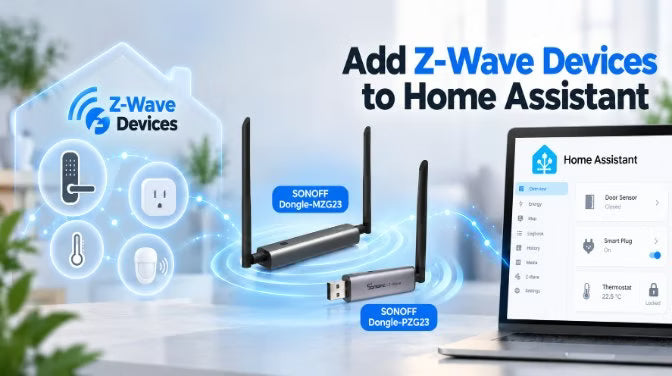
For Home Assistant, a Zigbee water leak sensor may require ZHA or Zigbee2MQTT with a compatible Zigbee coordinator, while a Matter-over-Thread sensor typically requires Matter support and a Thread Border Router.
If you want to use the sensor across another smart home ecosystem, check whether it can be added directly, shared through Matter, or exposed through a compatible bridge.
Reliable Connection in the Basement
Basements can be harder for wireless devices because of concrete, walls, distance from the hub, and nearby metal equipment. Test the sensor in its final location instead of assuming that successful pairing elsewhere in the house means the basement connection will also be reliable.
Battery Life and Maintenance
Leak sensors often sit unattended for long periods, so long battery life and low-battery reporting are useful. Water resistance and easy testing also matter, especially for sensors placed close to sump pits, drain pans, or other damp areas.
Using SONOFF SNZB-05P as a Basement Water Detector
The SONOFF SNZB-05P is a Zigbee 3.0 water leak sensor that fits common basement use cases such as sump areas, water heaters, laundry spaces, and exposed plumbing. Its raised probes can detect liquid levels as low as 0.5 mm, while the concave top surface helps collect and detect slow drips.

SONOFF Zigbee Water Leak Sensor | SNZB-05P
$19.90
0.5 mm Leak Detection, Drip Detection, Optional Detection Cable, IP67 Water Resistance, Up to 5-Year Battery Life, Home Assistant & Matter Bridge Compatibility.
View Product- For small, predictable leak points, place the sensor near a sump pit, water heater, washer, utility sink, or below exposed pipe connections. The elevated probe design also allows it to sit on metal surfaces without the surface itself bridging the probes.
- For wider or less predictable leak paths, the SNZB-05P supports optional water detection cables, and multiple cable sections can be connected in series.
The water leak sensor is rated IP67 and uses a CR2477 battery with a stated battery life of up to 5 years under SONOFF's specified test conditions.
With a compatible SONOFF Zigbee gateway and eWeLink setup, the SNZB-05P can send app notifications and trigger an audible alarm through a supported gateway or linked device. In Home Assistant, its leak state can be used to trigger notifications, sirens, lights, or other automations. The sensor can also be exposed to Apple Home through a compatible Matter Bridge.
Test Your Basement Water Detector Before You Need It
After installation, test the full alert path — not just whether the sensor appears online.
- Apply a small, controlled amount of water to the sensing area and confirm that the sensor detects it. Keep the test well away from electrical equipment to avoid accidentally spilling water onto powered devices or wiring.
- Confirm that the sensor reports a wet state and that the expected phone notification, gateway alarm, or Home Assistant automation runs.
- Test it in its final basement location to make sure the wireless connection remains reliable.
- Dry the sensor or detection cable and confirm that the status returns to normal.
If you use several basement sensors, give each one a clear location name such as Sump Pump, Water Heater, or Basement Washer so an alert immediately tells you where to check.
Tip: For sensors with two exposed metal sensing contacts, such as the SONOFF SNZB-05P, you can also perform a quick functional check by briefly touching both contacts at the same time with a conductive metal object, such as the metal shaft of a screwdriver. This can confirm that the sensor and alert chain respond correctly without using water, but a water test is still the better way to verify real leak detection.
FAQ
Q1: Where should I place a water sensor in my basement?
Place sensors near the areas most likely to leak, such as the sump pump, water heater, basement washer, exposed pipes, HVAC drainage, and any wall or corner that has leaked before. Follow the path water is most likely to take rather than placing a sensor simply in the middle of the room.
Q2: How many water leak sensors do I need in a basement?
It depends on how many separate leak-risk areas you have. A sump pump, water heater, washer, and utility sink may all need separate monitoring if water from each one would travel in a different direction.
Q3: Can a water sensor tell me if my sump pump fails?
Not directly. A water sensor detects rising or escaped water that may result from a sump pump problem, but it does not diagnose the pump itself.
Q4: Do basement water detectors send alerts to your phone?
Some basic detectors only sound a local alarm, while connected water sensors can send phone notifications through a compatible hub, app, or smart-home platform. The SNZB-05P can send notifications through a compatible Zigbee and eWeLink setup, or through Home Assistant when configured with ZHA or Zigbee2MQTT. The sensor itself does not contain a built-in siren.
Q5: Can a basement water detector work with Home Assistant or Matter?
Yes, depending on the device and setup. The SONOFF SNZB-05P works with Home Assistant through ZHA or Zigbee2MQTT using a compatible Zigbee coordinator. It can also be exposed to supported Matter ecosystems through a compatible Matter Bridge; the SNZB-05P itself is a Zigbee device, not a native Matter sensor.
👉 For Zigbee-based basement leak monitoring, explore the SONOFF SNZB-05P and optional detection cable.
Q6: What is the best type of water detector for a basement?
There is no single best type for every basement. A water leak sensor works well for predictable leak locations such as a water heater or sump area, while a detection cable is better when water could appear along a longer path. If you want alerts while away from home, choose a connected sensor and make sure its wireless connection works reliably in the basement.

Leave a comment
All comments are moderated before being published.
This site is protected by hCaptcha and the hCaptcha Privacy Policy and Terms of Service apply.