









Introduzione
L'estate spesso trasforma l'irrigazione in un compito quotidiano. Prati, giardini, serre, orti e aiuole richiedono irrigazioni più frequenti ed è facile dimenticare di chiudere il rubinetto, annaffiare troppo le piante o lasciarle incustodite durante le assenze.
Un timer di irrigazione tradizionale può automatizzare un programma fisso, ma non può adattarsi quando è prevista pioggia, il terreno è ancora umido o le esigenze di irrigazione cambiano con il meteo. Una valvola d'acqua intelligente collegata a Home Assistant offre maggiore flessibilità. Puoi controllare l'irrigazione da remoto, creare programmi per diverse aree, saltare l'irrigazione prima della pioggia o attivare la valvola quando il terreno si asciuga. Alcuni modelli possono anche monitorare il flusso d'acqua e tracciare il consumo.
Tuttavia, non tutte le valvole d'acqua sono progettate per la stessa configurazione. Alcune si collegano direttamente a un rubinetto esterno, mentre altre sono destinate a sistemi permanenti di irrigazione a più zone o alla protezione dalle perdite per tutta la casa.
Questa guida si concentra sulle valvole d'acqua intelligenti collegate a tubo per l'irrigazione. Spiega quale tipo si adatta alla tua configurazione, cosa controllare prima dell'acquisto e come creare automazioni pratiche per l'irrigazione in Home Assistant.
Scegli il tipo giusto di valvola d'acqua per la casa
Le valvole d'acqua generalmente si dividono in tre categorie: valvole d'acqua collegate a tubo, centraline di irrigazione con valvole solenoidi e valvole di chiusura per tutta la casa.
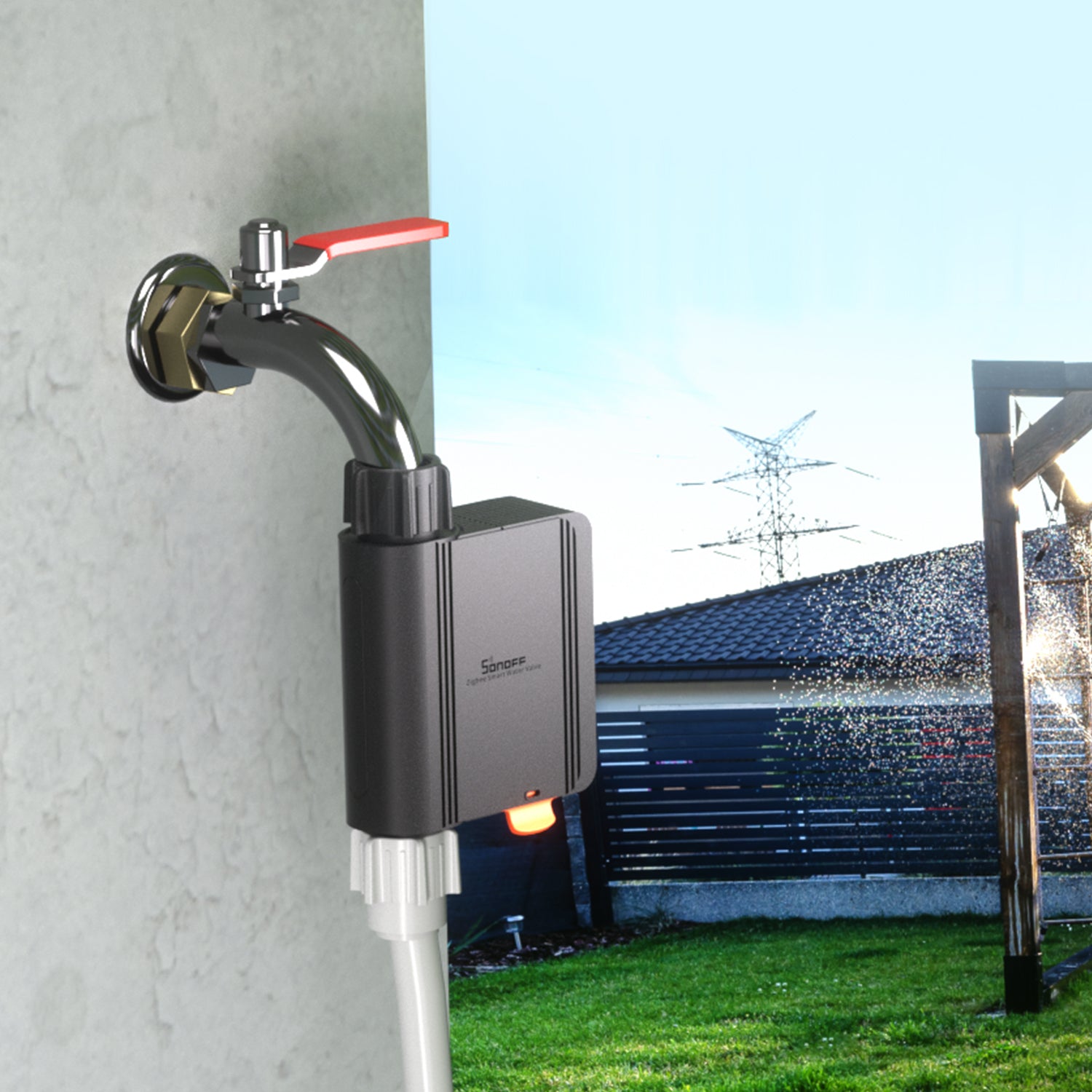
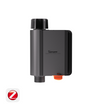
Per la maggior parte delle irrigazioni esterne — come prati, giardini, serre, aiuole rialzate, irrigatori e irrigazione a goccia — una valvola intelligente collegata a tubo è l'opzione più semplice. Si installa direttamente tra un rubinetto esterno e un tubo da giardino, un irrigatore o una linea a goccia, senza cablaggi elettrici o modifiche idrauliche permanenti. Queste valvole sono generalmente alimentate a batteria e diversi modelli possono controllare una o due aree di irrigazione in modo indipendente.

Gli altri due tipi sono progettati per sistemi diversi:
- Le centraline di irrigazione e le valvole solenoidi sono utilizzate in sistemi di irrigazione permanenti a più zone, come gli irrigatori sotterranei per prati. Controllano diverse valvole cablate collegate a tubazioni fisse e di solito richiedono un'alimentazione elettrica e un'installazione più complessa.

- Le valvole di chiusura dell'acqua per tutta la casa sono installate sulla linea principale dell'acqua domestica. Il loro scopo è interrompere l'erogazione dell'acqua in caso di perdita o emergenza, non per controllare l'irrigazione regolare di prati o piante da giardino.

|
La tua configurazione o obiettivo |
Opzione migliore |
|
Un tubo, irrigatore o linea a goccia |
Valvola a zona singola collegata a tubo |
|
Due aree con programmi separati |
Valvola a doppia zona collegata a tubo |
|
Sistema permanente di irrigazione a più zone |
Centralina di irrigazione |
|
Valvola principale dell'acqua per la protezione dalle perdite |
Valvola di chiusura generale per tutta la casa |
Cosa controllare prima di acquistare una valvola d'acqua per Home Assistant
Una valvola d'acqua non dovrebbe essere scelta solo in base alle funzionalità. Prima di acquistare, verifica che funzioni correttamente con Home Assistant, si adatti al tuo impianto di irrigazione e possa operare affidabilmente all'aperto.
Compatibilità con Home Assistant
Controlla se la valvola funziona con ZHA, Zigbee2MQTT, Matter o un'integrazione ufficiale di Home Assistant. Ancora più importante, conferma quali funzioni sono disponibili dopo l'abbinamento. Alcune valvole supportano solo il controllo base on/off, mentre orari, dati di flusso o impostazioni avanzate restano limitati all'app del produttore.
💡Consiglio: Che tu scelga una valvola d'acqua Zigbee, Matter o Wi-Fi, verifica quali funzioni sono esposte in Home Assistant.
Controllo a uscita singola o doppia
Scegli il numero di uscite in base a quante aree necessitano di irrigazione indipendente.
- Una valvola a uscita singola è adatta per un irrigatore da prato, una linea a goccia, una serra o un'aiuola.
- Una valvola a doppia uscita è migliore per due aree con orari separati, come un prato e un'aiuola o una serra e un orto.
Monitoraggio del flusso
Un misuratore di flusso non è essenziale per un'irrigazione temporizzata semplice, come far funzionare una linea a goccia per 20 minuti ogni mattina.
Scegli una valvola d'acqua con misuratore di flusso se vuoi monitorare il consumo d'acqua, interrompere l'irrigazione dopo un volume target, rilevare flussi anomali o confermare che l'acqua scorre effettivamente dopo l'apertura della valvola. Il monitoraggio del flusso aggiunge dati utili, ma non è necessario se serve solo un'irrigazione temporizzata semplice.
Durabilità esterna
Una valvola d'acqua da esterno deve resistere a pioggia, luce solare, variazioni di temperatura e movimenti ripetuti del tubo.
Controlla la classificazione IP, l'intervallo di temperatura di funzionamento, il materiale dell'ingresso e la durata della filettatura. In climi freddi, molte valvole d'acqua intelligenti da esterno non sono progettate per resistere al gelo. Scollega la valvola e conservala al chiuso durante l'inverno per prevenire danni da congelamento.
Consiglio: La copertura wireless è importante. Pareti esterne e lunghe distanze possono indebolire i segnali Zigbee, quindi potrebbe essere necessario un router Zigbee alimentato a rete nelle vicinanze.
Altri controlli importanti
Prima di acquistare, conferma anche:
- Dimensioni delle filettature di ingresso e uscita
- Compatibilità con gli standard locali di rubinetti e tubi
- Gamma di pressione dell'acqua supportata
- Durata della batteria e opzioni di alimentazione disponibili
- Controllo manuale quando Home Assistant o la rete non sono disponibili
- Protezione con tempo massimo di funzionamento o spegnimento automatico
Un'impostazione di tempo massimo di funzionamento aiuta a prevenire l'irrigazione eccessiva chiudendo automaticamente la valvola dopo un periodo prestabilito.
Quale valvola d'acqua SONOFF si adatta al tuo impianto
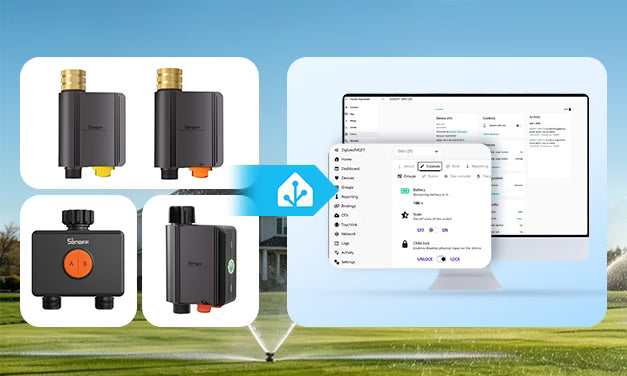
Basandosi sui fattori di acquisto sopra indicati, le seguenti valvole d'acqua intelligenti SONOFF Zigbee coprono le esigenze più comuni di irrigazione a zona singola, monitoraggio del flusso e a doppia zona.
Scegli principalmente in base al numero di aree da controllare e se desideri misurare il flusso d'acqua, e verifica le differenze di funzionalità tra ZHA e Zigbee2MQTT prima di selezionare un modello.
Hydro ONE Lite: Ideale per irrigazione temporizzata semplice
Hydro ONE Lite è una valvola a uscita singola senza misuratore di flusso. Un ingresso in ottone migliorato aumenta la durabilità contro la pressione dell'acqua a lungo termine e l'esposizione al sole, mentre Zigbee 3.0 e comunicazione di prossimità offrono opzioni di controllo flessibili. Alimentata da 4 batterie AA, si integra con Home Assistant tramite Zigbee2MQTT o ZHA.
✅ Ideale per: un irrigatore per prato, linea a goccia, serra, orto, aiuola o altra configurazione di irrigazione a zona singola dove l'irrigazione temporizzata o basata su condizioni è sufficiente e non è necessario monitorare il consumo d'acqua.

Hydro ONE: Ideale per l'irrigazione a zona singola con monitoraggio del flusso
Hydro ONE è una valvola d'acqua a uscita singola con misuratore di flusso integrato per un'area di irrigazione controllata indipendentemente. Supporta irrigazione temporizzata e basata sul volume, rendendola adatta quando è importante monitorare il consumo d'acqua. L'ingresso in ottone migliora la resistenza e la durabilità per l'uso esterno, mentre Zigbee 3.0 e comunicazione di prossimità offrono opzioni di controllo flessibili. Alimentata da 4 batterie AA, si integra con Home Assistant tramite Zigbee2MQTT o ZHA.
✅ Ideale per: prati, giardini, orti, rabbocchi piscina, irrigazione a goccia o altre applicazioni dove è importante monitorare il consumo d'acqua.
Hydro DUO: Ideale per l'irrigazione a due zone con monitoraggio del flusso
Hydro DUO è una valvola d'acqua Zigbee a doppio canale con misuratore di flusso per due zone di irrigazione controllate indipendentemente. Ogni canale può seguire il proprio programma di irrigazione, facilitando la gestione di aree con esigenze diverse. L'ingresso in ottone resistente garantisce una connessione idrica più affidabile, mentre la texture antiscivolo facilita la chiusura a mano. Con una classificazione IP65, alimentazione a 4 batterie AA, supporto Type-C, Zigbee 3.0 e comunicazione di prossimità, Hydro DUO è progettato per un'installazione esterna flessibile. Si integra con Home Assistant tramite Zigbee2MQTT o ZHA.
✅ Ideale per: Due aree di irrigazione con esigenze diverse, come un prato e un'aiuola, una serra e un orto, o un irrigatore e una linea di irrigazione a goccia.
Nota prodotto: Hydro ONE Lite, Hydro ONE e Hydro DUO sono disponibili in due versioni di filettatura: BSP (British Standard Pipe) per Regno Unito, Europa e la maggior parte delle altre regioni, e NH (filettatura per tubo nordamericana) per il Nord America.
Valvola d'acqua intelligente Zigbee: ideale per irrigazione base a zona singola con monitoraggio del flusso
L'originale SONOFF Valvola d'acqua intelligente Zigbee è un'opzione semplice a singola uscita per un' irrigazione di base con monitoraggio del flusso. Si installa tra un rubinetto esterno e il tubo, non richiede rifacimenti elettrici o modifiche idrauliche permanenti, e supporta sia l'irrigazione temporizzata che basata sul volume. Può registrare il consumo d'acqua e la durata dell'irrigazione sulle piattaforme supportate ed è compatibile sia con ZHA che con Zigbee2MQTT.
✅ Ideale per: Un semplice irrigatore per prato, tubo da giardino, orto o linea di irrigazione a goccia dove desideri un controllo intelligente di base con monitoraggio del consumo d'acqua.
Supporto funzionalità Home Assistant: ZHA vs Zigbee2MQTT
Usa le tabelle seguenti per confrontare quali funzioni sono attualmente disponibili tramite ZHA e Zigbee2MQTT per ogni valvola d'acqua SONOFF.
Serie Hydro: ZHA vs Zigbee2MQTT
|
Caratteristica |
||||||
|
Z2M |
ZHA |
Z2M |
ZHA |
Z2M |
ZHA |
|
|
Irrigazione manuale |
✓ |
✓ |
✓ |
✓ |
✓ |
✓ |
|
Collegamento scena |
✓ |
✓ |
✓ |
✓ |
✓ |
✓ |
|
OTA |
✓ |
✓ |
✓ |
✓ |
✓ |
✓ |
|
Visualizza livello batteria |
✓ |
✓ |
✓ |
✓ |
✓ |
✓ |
|
Allarme anomalo (batteria scarica, carenza d'acqua, perdita d'acqua e allarme gelo) |
✓* (supporta solo l'allarme batteria scarica) |
✓* (Non supporta l'allarme gelo) |
✓* (Non supporta l'allarme gelo) |
|||
|
Regolazione stagionale |
✓ |
✓ |
✓ |
✓ |
✓ |
✓ |
|
Programmazione intelligente |
✓ |
✓ |
✓ |
✓ |
✓ |
✓ |
|
Ritardo pioggia |
✓ |
✓ |
✓ |
✓ |
✓ |
✓ |
|
Imposta stato valvola in caso di carenza d'acqua |
× |
× |
✓ |
× |
✓ |
× |
|
Blocco bambini |
✓ |
✓ |
✓ |
✓ |
✓ |
✓ |
|
Registro storico |
✓ |
✓ |
✓ |
✓ |
✓ |
✓ |
|
Predefinito manuale |
✓ |
✓ |
✓ |
✓ |
✓ |
✓ |
|
Imposta unità |
✓ |
✓ |
✓ |
× |
✓ |
× |
|
Regolazione basata sul meteo |
× |
× |
× |
× |
× |
× |
|
Calendario |
× |
× |
× |
× |
× |
× |
Nota: Hydro ONE Lite, Hydro ONE e Hydro DUO possono essere integrati con Home Assistant tramite ZHA, ma attualmente richiedono uno script di configurazione ZHA aggiuntivo. Se usi Zigbee2MQTT, questo script non è necessario.
Usi ZHA con la serie Hydro? Scarica le istruzioni di configurazione e lo script corrispondenti:
Valvola d'acqua intelligente Zigbee: ZHA vs Zigbee2MQTT
|
Caratteristica |
||
|
ZHA |
Z2M |
|
|
Acceso/Spento |
✓ |
✓ |
|
Volume di irrigazione |
× |
✓ |
|
Registro storico |
✓ |
✓ |
|
Scena locale |
✓ |
✓ |
|
OTA |
✓ |
✓ |
Come installare e collegare una valvola d'acqua intelligente a Home Assistant
Le valvole d'acqua intelligenti connesse al tubo sono solitamente facili da installare. Nella maggior parte dei casi, si collega la valvola a un rubinetto esterno, si collega il tubo o la linea di irrigazione, si inseriscono le batterie o si collega l'alimentazione USB-C, a seconda del modello, e si controllano le giunzioni per eventuali perdite. Normalmente non sono necessari rifacimenti elettrici o modifiche idrauliche permanenti.
Installa la valvola
Prima dell'installazione, verifica che la filettatura della valvola corrisponda al tuo rubinetto e al tubo. Assicurati che la guarnizione sia posizionata correttamente, stringi la connessione a mano e apri brevemente l'acqua per controllare eventuali perdite. Evita di stringere eccessivamente, specialmente se sono presenti raccordi in plastica.
Installa e testa la valvola vicino alla sua posizione finale, poiché le pareti esterne e la distanza dal coordinatore o router possono influire sulla forza del segnale wireless.
👉 Usi una valvola d'acqua SONOFF? Segui la guida passo-passo all'installazione della valvola d'acqua smart per completare la configurazione e aggiornare il tuo sistema di irrigazione in pochi minuti.
Aggiungi una valvola d'acqua a Home Assistant
Il processo di configurazione dipende dal protocollo di comunicazione della valvola:
- Zigbee: Metti la valvola in modalità accoppiamento e aggiungila tramite ZHA o Zigbee2MQTT usando un coordinatore Zigbee compatibile (ad esempio, SONOFF ZBDongle-P/ZBDongle-E, PoE Dongle | Dongle-M, Dongle Plus MG24, Dongle-LMG21). ZHA è generalmente più facile da configurare ed è più adatto ai principianti, mentre Zigbee2MQTT offre configurazioni più avanzate e spesso espone una gamma più ampia di funzionalità del dispositivo. Il supporto effettivo delle funzionalità dipende dal modello di valvola.
- Matter: Aggiungi la valvola tramite la integrazione Matter di Home Assistant scansionando il suo codice QR Matter con la Home Assistant Companion App sul tuo smartphone. I modelli Matter-over-Thread richiedono anche un Thread Border Router compatibile.
- Wi-Fi: Per prima cosa, collega la valvola alla tua rete Wi-Fi, solitamente tramite l'app del produttore. Poi aggiungila usando la integrazione ufficiale di Home Assistant del produttore o un'altra integrazione supportata. Alcuni modelli Wi-Fi dipendono da un account cloud, mentre altri supportano il controllo locale.
Dopo che la valvola appare in Home Assistant, rinomina il dispositivo e le sue entità, testa l'apertura e la chiusura manuale e conferma che tutti i dati disponibili su batteria, flusso e stato si aggiornano correttamente prima di creare automazioni.
4 Idee pratiche per automazioni di irrigazione con Home Assistant
Dopo che la valvola è stata installata e collegata a Home Assistant, puoi iniziare a creare automazioni per l'irrigazione basate su tempo, meteo, umidità del terreno, flusso d'acqua e le esigenze delle diverse zone di irrigazione. Queste automazioni di irrigazione per Home Assistant sono utili per l'irrigazione quotidiana del giardino, l'irrigazione a goccia, l'irrigazione delle serre e configurazioni di irrigazione a due zone.
Programma l'irrigazione con durata massima di funzionamento
✅ Ideale per: Prati, aiuole, orti, serre e sistemi di irrigazione a goccia con esigenze di irrigazione regolari e prevedibili.
Usa questo quando la tua routine di irrigazione è abbastanza costante e vuoi un programma semplice senza affidarti ai dati di umidità del terreno o del flusso.
Come funziona:
- Apri la valvola a un orario prestabilito.
- Funziona per una durata definita.
- Chiudi automaticamente quando termina il tempo di irrigazione.
- Forza la chiusura della valvola se si raggiunge il tempo massimo di funzionamento.
- Facoltativamente invia una notifica di completamento.
💡Consiglio: Programma l'irrigazione per la prima mattina o la sera per ridurre l'evaporazione durante il caldo. Imposta il tempo massimo di funzionamento più lungo della durata normale dell'irrigazione, così da agire come backup e non come condizione primaria di spegnimento.
Nota sul prodotto: Le valvole d'acqua intelligenti SONOFF supportano anche una durata massima di irrigazione manuale tramite la funzione Manual Default. Puoi impostarla come limite di sicurezza in modo che la valvola si chiuda automaticamente dopo il tempo di funzionamento definito.
Irrigare solo quando il terreno è secco
✅ Ideale per: Aiuole rialzate, vasi, serre, orti e zone di irrigazione a goccia dove l'umidità del terreno può variare tra i cicli di irrigazione.
Usa questo quando hai un sensore di umidità del terreno e vuoi che l'irrigazione risponda alle condizioni reali del terreno piuttosto che a un programma fisso.
Come funziona:
- Arriva l'orario programmato per l'irrigazione.
- Home Assistant verifica se l'umidità del terreno è sotto la soglia impostata.
- Conferma anche che non stia piovendo e che l'area non sia stata irrigata di recente.
- La valvola si apre solo quando tutte le condizioni sono soddisfatte.
- La valvola si chiude dopo la durata impostata o al raggiungimento del tempo massimo di funzionamento.
💡Consiglio: Posiziona il sensore del terreno in una zona rappresentativa dell'area di irrigazione, lontano da irrigatori e da punti insolitamente umidi o secchi. Richiedi che la lettura dell'umidità rimanga sotto la soglia per un periodo stabilito e aggiungi un tempo di raffreddamento per evitare irrigazioni ripetute causate da brevi fluttuazioni.
Irrigare per volume e rilevare flussi anomali
✅ Ideale per: Irrigazione a goccia, serre, orti, rabbocchi di piscine e altre applicazioni dove è importante un volume d'acqua costante e il monitoraggio del flusso.
Usa questo quando hai una valvola dell'acqua con monitoraggio del flusso integrato, come Hydro ONE o Hydro DUO, e vuoi che l'irrigazione si fermi in base al consumo reale d'acqua piuttosto che solo al tempo.
Come funziona:
- Apri la valvola e inizia a misurare il consumo d'acqua.
- Chiudi la valvola quando si raggiunge il volume target.
- Invia un avviso se la valvola è aperta ma non viene rilevato alcun flusso.
- Chiudi la valvola e avvisa l'utente se il flusso è insolitamente alto.
- Forza la chiusura della valvola se il tempo massimo di funzionamento viene raggiunto prima che sia stata erogata la quantità d'acqua prevista.
💡Consiglio: Il controllo basato sul volume garantisce un'irrigazione più costante e può anche rilevare tubazioni bloccate, insufficiente fornitura d'acqua o perdite impreviste.
Irrigare Due Zone con Regole Diverse
✅ Ideale per: Due zone di irrigazione con esigenze diverse, come un prato e un'aiuola, una serra e un orto, o un irrigatore e una linea di irrigazione a goccia.
Usalo quando hai una valvola a doppio canale o due valvole separate e vuoi che ogni zona segua il proprio programma, tempo di funzionamento, soglia di umidità del terreno o volume d'acqua target.
Come funziona:
- La Zona A funziona secondo il proprio programma e le proprie condizioni.
- La Zona B inizia dopo che la Zona A ha terminato.
- Ogni zona può utilizzare un tempo di funzionamento, un volume d'acqua o una soglia di umidità del terreno diversa.
- L'irrigazione sequenziale aiuta a evitare cali di pressione o flusso causati dall'attivazione simultanea di entrambe le zone.
💡Nota sul prodotto: Hydro DUO combina due uscite controllate indipendentemente con monitoraggio del flusso integrato, permettendo a entrambe le zone di seguire piani di irrigazione separati senza richiedere due valvole individuali.
Conclusione
La valvola d'acqua intelligente giusta deve corrispondere al tuo sistema di irrigazione, al numero di zone di irrigazione e alla necessità di monitoraggio del flusso. Una volta collegata a Home Assistant, può fare molto più che accendere e spegnere l'acqua: ti aiuta ad automatizzare l'irrigazione di routine, rispondere alla pioggia o alle condizioni del terreno, monitorare il consumo d'acqua e ridurre il rischio di eccessiva irrigazione.
- Per un'irrigazione semplice a zona singola, scegli un modello base senza contatore di flusso.
- Per il monitoraggio del consumo d'acqua o due zone controllate indipendentemente, scegli una valvola con monitoraggio del flusso o a doppio canale.
👉 Esplora le valvole d'acqua intelligenti SONOFF, tra cui:
- SONOFF Zigbee Smart Water Valve, Hydro ONE per l'irrigazione a zona singola con monitoraggio del flusso.
- Hydro ONE Lite per l'irrigazione semplice a zona singola senza monitoraggio del flusso.
-
Hydro DUO per l'irrigazione a due zone con monitoraggio del flusso.
Scegli il modello giusto che si adatti al tuo giardino, prato, serra o sistema di irrigazione a goccia.
Domande frequenti
D 1: Qual è la migliore valvola dell'acqua per Home Assistant?
La migliore valvola dell'acqua per Home Assistant dipende dal tuo sistema di irrigazione, dall'integrazione con Home Assistant e dal fatto che tu abbia bisogno o meno del monitoraggio del flusso.
- Scegli una valvola che funzioni con ZHA, Zigbee2MQTT, Matter, o l'integrazione ufficiale del marchio.
- Controlla quali funzioni sono disponibili dopo l'abbinamento, non solo se la valvola può essere aggiunta.
- Per un'area di irrigazione, una valvola a uscita singola di solito è sufficiente.
- Scegli il monitoraggio del flusso se vuoi tracciare l'uso dell'acqua, irrigare in base al volume o rilevare flussi anomali.
- Per due aree con programmi separati, usa una valvola a doppia uscita.
- Infine, assicurati che il tipo di filettatura, la classificazione per esterni, l'intervallo di pressione dell'acqua, la durata della batteria e la protezione per il tempo massimo di funzionamento siano adatti alla tua installazione.
D 2: Posso usare una valvola intelligente con Home Assistant?
Sì. Molte valvole intelligenti possono funzionare con Home Assistant tramite Zigbee, Matter, Wi-Fi, ZHA, Zigbee2MQTT o un'integrazione del marchio. Prima di acquistare, verifica quali funzioni sono disponibili in Home Assistant, perché alcune valvole supportano solo il controllo base on/off.
D 3: Zigbee o Wi-Fi, quale è meglio per una valvola d'acqua Home Assistant?
Zigbee è spesso una buona scelta per valvole d'acqua a batteria perché supporta il funzionamento a basso consumo e il controllo locale tramite un coordinatore.
Il Wi-Fi può essere più semplice per chi non ha un sistema Zigbee, ma alcune valvole Wi-Fi si basano su integrazioni cloud. La scelta migliore dipende dal tuo setup Home Assistant esistente e dalla copertura del segnale esterno.
D 4: Ho bisogno di un contatore di flusso su una valvola intelligente?
Non sempre. Una valvola senza contatore di flusso è sufficiente per un'irrigazione temporizzata semplice. Scegli una valvola con monitoraggio del flusso se vuoi tracciare l'uso dell'acqua, interrompere l'irrigazione dopo un volume target, rilevare flussi anomali o confermare che l'acqua scorre effettivamente dopo l'apertura della valvola.
D 5: Posso usare una valvola intelligente per irrigazione a goccia?
Sì. Una valvola intelligente collegata a un tubo può controllare una linea di irrigazione a goccia se la dimensione della filettatura, la pressione dell'acqua e la portata corrispondono al tuo impianto. Per un'irrigazione a goccia più precisa, un modello con monitoraggio del flusso può aiutare a tracciare l'uso dell'acqua e rilevare flussi anomali.
D 6: Una valvola intelligente per acqua può controllare due zone di irrigazione?
Una valvola a uscita singola controlla una linea di irrigazione. Per controllare due zone indipendentemente, usa una valvola a doppia uscita, come la SONOFF Hydro DUO, o installa due valvole separate. Questo permette a ogni zona di seguire il proprio programma, tempo di funzionamento, soglia di umidità del terreno o volume d'acqua target.
D 7: Cosa devo controllare prima di installare una valvola intelligente per acqua esterna?
Controlla le dimensioni delle filettature di ingresso e uscita, la compatibilità del rubinetto, l'intervallo di pressione dell'acqua, la classificazione IP, la temperatura di esercizio, la batteria o la fonte di alimentazione e la potenza del segnale wireless nel luogo di installazione. In climi freddi, verifica se la valvola deve essere scollegata e conservata al chiuso durante l'inverno.

Commenta
Nota che i commenti devono essere approvati prima di essere pubblicati.
Questo sito è protetto da hCaptcha e applica le Norme sulla privacy e i Termini di servizio di hCaptcha.