







Panoramica
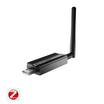
Secondo la specifica Zigbee e i requisiti di certificazione, una distanza di trasmissione diretta compresa tra 10 e 100 metri in linea di vista, a seconda della potenza di uscita e delle caratteristiche ambientali, tra un Coordinatore Zigbee (chiamato gateway Zigbee, hub Zigbee, dongle Zigbee, stick Zigbee, ecc.) e un dispositivo Zigbee (dispositivo router Zigbee, dispositivo finale Zigbee) è accettabile.
Ma vogliamo conoscere il limite di distanza di trasmissione della serie SONOFF Zigbee Dongle. E vogliamo anche verificare che l'LQI (Indice di Qualità del Collegamento) non abbia una correlazione significativa con le prestazioni operative nell'uso quotidiano.
Nota: riguardo a LQI, è fuorviante ed è stato sostituito da LQA (Link Quality Assessment) nella Zigbee Specification Core R23. Diversi fornitori di chip Zigbee utilizzano algoritmi differenti per calcolare LQI. Questo vale anche per le varianti dei loro prodotti. Zigbee2MQTT ha chiaramente dichiarato A meno che tu non sia un esperto di Zigbee o sia guidato da uno, ignora questi valori.
Allo stesso tempo, per fornire agli utenti una comprensione più intuitiva delle capacità di comunicazione della serie SONOFF Dongle, abbiamo organizzato un test di distanza e documentato completamente la metodologia del test e i dati grezzi. Questo approccio garantisce che i risultati siano riproducibili e verificabili, presentando le prestazioni di comunicazione dei diversi modelli di Zigbee Dongle a varie distanze.
Dopo una serie di test, abbiamo raggiunto le seguenti conclusioni:
- Tutti i modelli della serie SONOFF Zigbee Dongle sono in grado di raggiungere un raggio di controllo di 350 metri in ambienti aperti.
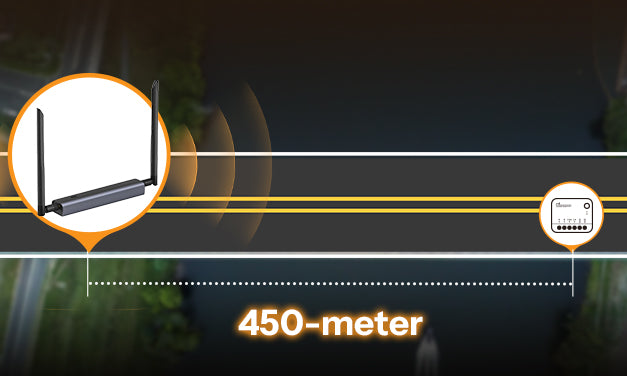
- Il Dongle Max è in grado di controllare dispositivi a distanze fino a 450 metri. (A causa di limitazioni del sito, non sono state testate distanze superiori a 450 metri.)
- Anche quando il valore LQI scende sotto 90, 60 o addirittura a livelli a una cifra, il controllo del dispositivo può ancora essere raggiunto con un tasso di successo del 100%, mantenendo tempi di risposta rapidi con latenza inferiore a 100 ms.
Questo test ha funzionato come un "esame" interno per i nostri dispositivi, e miriamo a presentare sia il processo e i risultati di questa valutazione in modo trasparente per te.
Panoramica del piano di test
Prima di presentare la configurazione del test, abbiamo definito diversi principi fondamentali di testing:
-
Prodotti reali:
Tutti i dispositivi utilizzati in questo test sono unità nuove di zecca, identiche a quelle disponibili sul sito ufficiale SONOFF, Amazon e altri marketplace. -
Dati reali:
Tutti i risultati presentati si basano su misurazioni effettivamente registrate durante il test. -
Riproducibilità:
Alle stesse condizioni, la nostra metodologia di test dovrebbe produrre risultati comparabili.
Attrezzatura di test
|
Dongle e dispositivo Zigbee |
|||
|
Modello |
Nome prodotto |
Tipo di firmware |
Versione firmware |
|
SONOFF Zigbee 3.0 USB Dongle Plus V2 |
NCP Zigbee |
7.4.4 |
|
|
SONOFF Dongle Lite MG21 |
NCP Zigbee |
7.4.5 |
|
|
SONOFF Dongle Plus MG24 |
NCP Zigbee |
7.4.5 |
|
|
SONOFF Dongle Max MG24 |
NCP Zigbee |
7.4.5 |
|
|
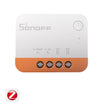
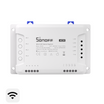
Interruttore Smart Zigbee (richiede filo neutro) |
Firmware ufficiale |
1.0.4 |
|

|
Attrezzatura aggiuntiva per test |
|
|
Tipo di dispositivo |
Dettagli |
|
Router |
Router Xiaomi 4A Gigabit Edition |
|
Raspberry Pi |
Esecuzione di Home Assistant con Zigbee2MQTT |
|
Power Bank |
Due unità: una alimenta il router, Raspberry Pi e laptop; l'altra alimenta un downlight modificato con ZBMINIR2 |
|
Downlight |
Convertito in un downlight smart usando ZBMINIR2, utilizzato per la conferma visiva dello stato acceso/spento |

Luoghi di test
Questo test è stato condotto utilizzando due punti definiti:
-
Punto di partenza
Il router, Raspberry Pi, laptop e il dongle Zigbee in test sono stati posizionati in questo luogo.
Il dongle è stato montato su un supporto a un'altezza di 1,2 m, e la sua posizione è rimasta invariata per tutta la durata del test. -
Punto finale
Un downlight modificato con ZBMINIR2, fissato anche a un'altezza di 1,2 m.
Il punto finale è stato spostato gradualmente alle distanze di 150 m / 250 m / 350 m / 450 m.

Procedura di test
A ogni punto di distanza, i test di controllo sono stati eseguiti utilizzando un processo unificato:
-
Configurazione del canale
Canale Zigbee: 26
Canale Wi-Fi: 1 -
Metodo di controllo
Controllo remoto del dispositivo tramite comandi MQTT -
Frequenza di controllo
Un comando ogni 2 secondi -
Numero di tentativi
30 tentativi di controllo consecutivi a ogni distanza
Durante il test, abbiamo registrato simultaneamente:
- Successo e fallimento del controllo
- Latenza di controllo (ms)
- Indicatore di qualità del collegamento Zigbee (LQI)
Nota:
Ogni volta che è stato testato un Dongle diverso, Zigbee2MQTT è stato completamente resettato rimuovendo la configurazione esistente e reinizializzando il sistema prima di iniziare il test successivo.
Test reale
*Per una visione dettagliata del test di distanza, si prega di fare riferimento al video pubblicato su Canale YouTube SONOFF, che documenta il processo di test in modo più dettagliato.
Il 4 febbraio 2026, il team di test SONOFF si è spostato da Shenzhen, Cina (la sede centrale di SONOFF) a Huizhou, Cina (la sede dell'impianto di produzione SONOFF). I test sono stati condotti su una strada aperta e rettilinea, in conformità con il piano di test descritto sopra.

Con il punto di partenza (Dongle) e il endpoint (ZBMINIR2) posizionato alla stessa altezza di 1,2 metri, la distanza di test è stata aumentata gradualmente. A ogni intervallo di distanza, abbiamo valutato le prestazioni di ZBDongle-E / Dongle-LMG21 / Dongle-PMG24 / Dongle-M, concentrandoci sull'associazione dei dispositivi e sul comportamento di controllo dei dispositivi a varie distanze.

Dopo un'intera giornata di test, abbiamo ottenuto un insieme di risultati affidabili e ripetibili, che costituiscono la base per ulteriori analisi.
Analisi dei dati
|
Dongle |
Distanza (metri) |
Dispositivo Zigbee |
Metodi di controllo |
Indicatori di controllo |
Valore medio |
|
ZBDongle-E |
150 |
ZBMINIR2 |
MQTT |
LQI |
96.53 |
|
Latenza di controllo (ms) |
58.33 |
||||
|
250 |
ZBMINIR2 |
MQTT |
LQI |
59.20 |
|
|
Latenza di controllo (ms) |
61.93 |
||||
|
350 |
ZBMINIR2 |
MQTT |
LQI |
59.73 |
|
|
Latenza di controllo (ms) |
70.40 |
||||
|
Dongle-LMG21 |
150 |
ZBMINIR2 |
MQTT |
LQI |
82.67 |
|
Latenza di controllo (ms) |
61.73 |
||||
|
250 |
ZBMINIR2 |
MQTT |
LQI |
68.43 |
|
|
Latenza di controllo (ms) |
63.50 |
||||
|
350 |
ZBMINIR2 |
MQTT |
LQI |
60.53 |
|
|
Latenza di controllo (ms) |
66.37 |
||||
|
Dongle-PMG24 |
150 |
ZBMINIR2 |
MQTT |
LQI |
30.93 |
|
Latenza di controllo (ms) |
59.17 |
||||
|
250 |
ZBMINIR2 |
MQTT |
LQI |
6.00 |
|
|
Latenza di controllo (ms) |
84.18 |
||||
|
350 |
ZBMINIR2 |
MQTT |
LQI |
18.67 |
|
|
Latenza di controllo (ms) |
71.93 |
||||
|
Dongle-M (UART su USB) |
150 |
ZBMINIR2 |
MQTT |
LQI |
41.52 |
|
Latenza di controllo (ms) |
70.41 |
||||
|
250 |
ZBMINIR2 |
MQTT |
LQI |
2.57 |
|
|
Latenza di controllo (ms) |
82.32 |
||||
|
350 |
ZBMINIR2 |
MQTT |
LQI |
4.40 |
|
|
Latenza di controllo (ms) |
79.33 |
||||
|
450 |
ZBMINIR2 |
MQTT |
LQI |
0 |
|
|
Latenza di controllo (ms) |
140.85 |
||||
|
Dongle-M (UART su Ethernet) |
150 |
ZBMINIR2 |
MQTT |
LQI |
40.13 |
|
Latenza di controllo (ms) |
66.23 |
||||
|
250 |
ZBMINIR2 |
MQTT |
LQI |
8.67 |
|
|
Latenza di controllo (ms) |
63.77 |
||||
|
350 |
ZBMINIR2 |
MQTT |
LQI |
14.40 |
|
|
Latenza di controllo (ms) |
63.90 |
||||
|
450 |
ZBMINIR2 |
MQTT |
LQI |
0.00 |
|
|
Latenza di controllo (ms) |
103.43 |
||||
|
Dongle-M (UART su Wi-Fi) |
150 |
ZBMINIR2 |
MQTT |
LQI |
57.27 |
|
Latenza di controllo (ms) |
68.17 |
||||
|
250 |
ZBMINIR2 |
MQTT |
LQI |
4.28 |
|
|
Latenza di controllo (ms) |
77.52 |
||||
|
350 |
ZBMINIR2 |
MQTT |
LQI |
5.73 |
|
|
Latenza di controllo (ms) |
76.20 |
||||
|
450 |
ZBMINIR2 |
MQTT |
LQI |
0.67 |
|
|
Latenza di controllo (ms) |
109.70 |
Distanza di comunicazione e stabilità del controllo
In condizioni di test aperte e senza ostacoli:
- ZBDongle-E, Dongle-M, Dongle-LMG21 e Dongle-PMG24 sono stati tutti in grado di associare con successo i dispositivi e mantenere un controllo stabile a distanze di 150 m, 250 m e 350 m.
- All'interno di un intervallo di 350 m, la latenza di controllo di tutti i Dongle SONOFF Zigbee è rimasta concentrata nell'intervallo 60–80 ms, con fluttuazioni relativamente piccole.
- Il Dongle-M è stato ancora possibile controllare dispositivi a una distanza di 450 m.
Nota: A causa di limitazioni del sito, non sono state testate distanze superiori a 450 metri (come 550 m o 650 m) per il Dongle-M.
Relazione tra LQI, distanza ed esperienza di controllo
Dai dati di test si può osservare un chiaro schema:
- Con l'aumentare della distanza di test, i valori di LQI sono diminuiti progressivamente, mentre il tasso di successo del controllo è rimasto molto alto e la latenza si è mantenuta intorno a 70–80 ms.
- Per Dongle-PMG24 e Dongle-M (entrambi basati sul chipset Silicon Labs MG24), il controllo del dispositivo è rimasto al 100% di successo anche quando LQI è sceso a valori a una cifra o addirittura a zero, con solo un leggero aumento della latenza.
Questi risultati indicano che LQI non può essere direttamente equiparato all'effettiva esperienza di controllo o alla portata di comunicazione utilizzabile.
Nelle implementazioni pratiche, LQI è meglio considerato come un indicatore di riferimento della qualità del collegamento, piuttosto che come unico criterio per determinare se un dispositivo è utilizzabile. Il tasso di successo del controllo e le prestazioni di latenza sono metriche più rappresentative dell'esperienza utente.


Commenta
Nota che i commenti devono essere approvati prima di essere pubblicati.
Questo sito è protetto da hCaptcha e applica le Norme sulla privacy e i Termini di servizio di hCaptcha.