




Introduction
Choosing a thermostat for your boiler? The first step is making sure it works with your heating system. Smart thermostats offer features like heating schedules, remote control, and automation, but compatibility comes first.
Boilers may use ON/OFF, OpenTherm, or manufacturer-specific controls. Your existing wiring, power supply, and heating setup also affect which thermostat you can install.
This guide will help you check compatibility, understand the options for different boiler types, and choose a thermostat that fits your heating needs.
1. How Does a Thermostat Control a Boiler Heating System?
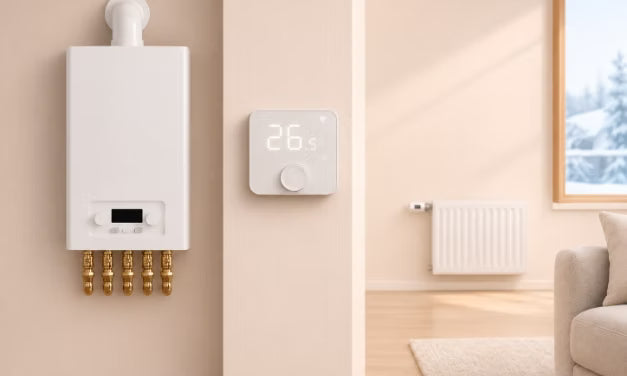
In a hot-water boiler heating system, the boiler heats water that circulates through radiators, hydronic baseboards, or underfloor heating pipes.
A room thermostat measures the indoor temperature and uses its setpoint and control logic to determine when to call for heat and when to stop. The boiler or heating controls respond to these heating requests.
In simple terms:
- Room gets cold → Thermostat calls for heat → Boiler and heating system respond → Room warms up → Heating demand ends.
Boiler Control, Room Thermostat, and TRV: What's the Difference?
|
Control |
Main Role |
|
Boiler flow-temperature control |
Sets or limits the water temperature supplied to the heating system. |
|
Room thermostat |
Measures room temperature and signals when space heating is needed. |
|
Thermostatic radiator valve (TRV) |
Regulates hot-water flow through an individual radiator based on the temperature sensed near the valve. |
2. What Thermostat Works With a Boiler?
Not every thermostat works with every boiler. The thermostat must match the boiler's supported control interface.
Many boilers use ON/OFF control, where a thermostat starts or stops a heating request through a dry-contact or switched-live connection. Others support modulating control, such as OpenTherm, which allows compatible thermostats to communicate adjustable heating requirements to the boiler.
Some boilers support both ON/OFF and OpenTherm. A compatible ON/OFF thermostat may still work, but it will not provide OpenTherm-based modulation control. If you want to retain OpenTherm-based control, choose a thermostat that supports OpenTherm and is compatible with your boiler.
|
Control Interface |
How It Works |
What to Check |
|
ON/OFF – Dry Contact |
Opens or closes a voltage-free contact to request heating. |
Whether the boiler accepts a voltage-free contact and its required switching behavior. |
|
ON/OFF – Switched Live |
Uses a switched voltage signal to request heating. |
The required control voltage and wiring specifications. |
|
OpenTherm |
Uses digital communication to exchange heating control information. |
OpenTherm support on both devices and the available features. |
|
Manufacturer-Specific |
Uses a proprietary control interface or communication protocol. |
Compatibility with the exact boiler model and controller. |
3. How to Check if a Thermostat Is Compatible With Your Boiler?
Before choosing a thermostat, check your boiler's control interface, wiring, power requirements, and existing heating controls. Use this checklist to identify what you need to confirm.
Boiler Thermostat Compatibility Checklist
|
What to Check |
What to Confirm |
|
Boiler model |
Find the exact manufacturer and model of your boiler. |
|
Control interface |
Check whether it supports dry-contact ON/OFF, switched live, OpenTherm, or manufacturer-specific controls. |
|
Existing controls |
Identify the current thermostat, receiver, programmer, zone valves, or wiring centre. |
|
Wiring and power |
Check the available wiring and the new thermostat's power requirements. |
|
Heating and hot water |
Check how space heating, hot water, and any heating zones are controlled. |
|
Installation requirements |
Confirm the mounting location, required components, and any installation constraints. |
Check the Boiler's Control Interface
Refer to your exact boiler model's installation manual to identify the supported control connections and terminal specifications. ON/OFF control may use dry-contact or switched-live connections, while other boilers support OpenTherm or manufacturer-specific digital controls.
Check the Wiring and Power Supply
Check the available connections where the thermostat or receiver will be installed. A two-wire connection may carry a switching signal, supply power, or support digital communication, so wire count alone cannot confirm compatibility.
Some thermostats are battery-powered, while others require low-voltage or mains power. Wireless models may also need a separately powered receiver.
Check the Existing Heating Controls
Identify how your current thermostat, receiver, programmer, and any zone valves or wiring centre work together. In some systems, the thermostat connects to other heating controls rather than directly to the boiler.
If space heating and domestic hot water are controlled separately, make sure the replacement thermostat fits the existing arrangement.
🔔Important: If compatibility or wiring requirements are unclear, consult the boiler manufacturer's documentation or a qualified heating professional. Electrical installation should follow the manufacturer's instructions and local regulations.
4. Which Thermostat Do You Need for Your Boiler Type?
Your boiler type helps determine what heating controls you need. The main difference is whether a thermostat only needs to control space heating or must work alongside separate hot-water and heating-zone controls.
|
Boiler Type |
What Thermostat Should You Look For? |
|
Combi boiler |
Combi boilers provide hot water on demand without a storage cylinder. A room thermostat that controls central heating is usually sufficient, provided it supports the boiler's control interface. Separate stored hot-water scheduling is generally unnecessary. |
|
System boiler |
These boilers typically use a separate hot-water cylinder. If you are replacing only the room thermostat, choose one compatible with the existing heating controls. If you also want to replace the hot-water programmer, look for a system that supports both functions. |
|
Conventional (heat-only) boiler |
These systems typically have a hot-water cylinder and separate control components. A room thermostat may be enough for a like-for-like replacement, but replacing the entire control system may require additional heating and hot-water controls. |
🔔 Note: Boiler types and heating system configurations may vary by region. Always check your specific boiler model and installation requirements to confirm thermostat compatibility.
What About Multi-Zone Heating?
If your home has separate heating zones, check whether each zone needs its own thermostat or controller. The system must also coordinate heating requests through the relevant zone valves or heating controls.
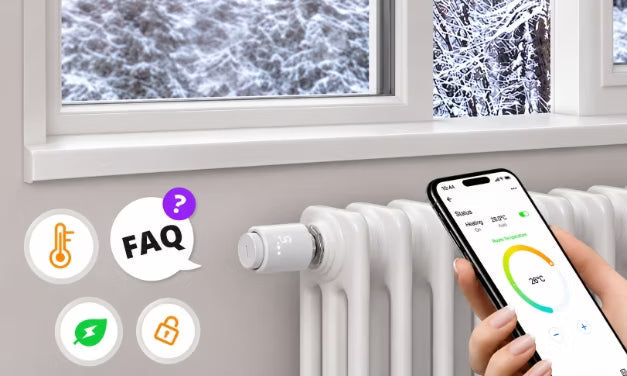
Smart radiator valves can provide individual radiator temperature control, but boiler-demand coordination depends on the wider heating system.
5. What Should You Look for in a Boiler Thermostat?
Wired or Wireless
A wired thermostat works well when suitable wiring and a convenient wall location are available. Wireless models offer more flexibility in placement but may still require a receiver connected to the boiler or heating controls.
Programmable Schedules
Look for daily or weekly schedules that fit your routine, with enough temperature periods and easy manual adjustments when your plans change.
Remote and Smart Home Control
If you want app control or smart home automation, check compatibility with your preferred platform and which features it supports, such as remote temperature adjustments, external sensors, or heating schedules.
Temperature Sensing and Placement
Thermostat placement affects how accurately it measures room temperature. Keep the thermostat away from direct sunlight, drafts, and nearby heat sources that could affect temperature readings. If the installation location is unsuitable, consider a model that supports an external room temperature sensor.
Local Operation and Reliability
Check whether temperature control, saved schedules, and manual adjustments still work without internet access or if the gateway loses connection. These failures can affect heating differently, and a power outage may prevent mains-powered controls from operating.
Total Installation and Ownership Cost
Consider the full setup cost, including any required receiver, hub, additional wiring, or professional installation. Optional sensors, smart radiator valves, and paid app features may add to the overall cost.
6. SONOFF TP-WGZBA Smart Thermostat for Boiler Heating
The SONOFF Thermostat Core TP-WGZBA offers ON/OFF boiler control, flexible heating schedules, external temperature sensing, and Zigbee smart-home integration for compatible hot-water heating systems.
ON/OFF Boiler Control
TP-WGZBA controls compatible boilers through potential-free COM/NO dry-contact terminals. It requires a separate 100–240V AC live and neutral power supply and supports configurable contact behavior for compatible heating systems.

Note: TP-WGZBA does not support OpenTherm modulation. Confirm that your boiler accepts dry-contact ON/OFF control before installation. Do not connect mains power directly to the COM/NO terminals.
Tip: It also provides a separate powered output (100–240V AC, max. 3A resistive load) for compatible hydronic underfloor heating actuators.
Flexible Heating Schedules
TP-WGZBA supports 3 customizable weekly heating schedules, each with up to 12 temperature periods per day. You can switch between schedules for workdays, weekends, sleep, or holidays without repeated setup.
Tip: TP-WGZBA has a built-in real-time clock (RTC) and stores heating schedules locally. Saved schedules continue running even if the Zigbee connection is temporarily lost, as long as the thermostat remains powered.
The physical dial allows easy temperature adjustments, while the display automatically wakes when you approach.

More Accurate Room Temperature Control
Use compatible external temperature sensors, such as SNZB-02D, SNZB-02LD, or SNZB-02WD, through a compatible SONOFF Zigbee gateway to measure temperature at a more representative room location. Temperature offset is also available for fine-tuning the displayed reading.
👉 Home Assistant users can also set up an external temperature source with a blueprint.
Smart Home and Ecosystem Compatibility
TP-WGZBA supports Zigbee 3.0 with compatible SONOFF gateways and the eWeLink app for remote heating control and automation.
Home Assistant integration is available through Zigbee2MQTT or ZHA. Apple Home can access the thermostat through a compatible Matter Bridge, while Alexa, Google Home, and SmartThings are supported through compatible integration methods.

Note: Available features and setup requirements vary by platform, gateway firmware, and integration version. Check the TP-WGZBA setup notes for current requirements.
Reduce Unnecessary Heating
TP-WGZBA supports automatic open-window detection and sensor-based detection using a compatible SONOFF door/window sensor, such as SNZB-04PR2, through a compatible SONOFF Zigbee gateway. Heating can automatically pause when an open window is detected, helping reduce unnecessary heating during ventilation.
Adjustable Temperature Hysteresis
TP-WGZBA allows you to adjust the temperature hysteresis to help prevent frequent relay switching caused by small temperature fluctuations around the setpoint. Depending on the hysteresis settings, heating may not start immediately when the room temperature falls slightly below the target, or it may continue briefly after the target temperature is reached.
You can reduce the corresponding hysteresis settings in the app if you want heating to start or stop closer to the target temperature. Increasing the temperature difference between heating start and stop thresholds can help reduce relay switching frequency, but may also allow greater room temperature fluctuations.
Even after the thermostat stops calling for heat, radiators or underfloor heating may continue releasing residual heat.
Detailed Heating History and Safety Protection
Review up to 6 months of heating history, including target temperature, actual temperature, and heating activity, to better understand your heating patterns.
Anti-freeze protection helps maintain a minimum safeguard temperature, while child lock prevents accidental adjustments.

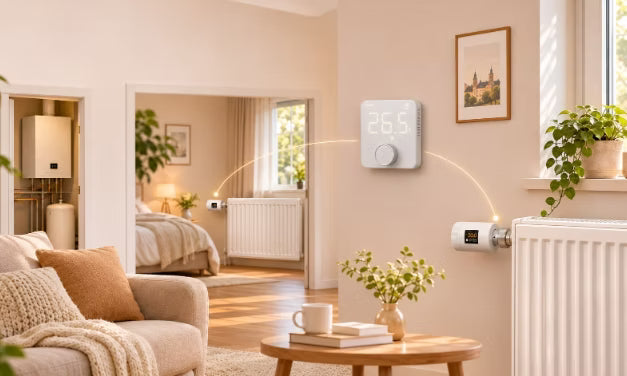
For homes with radiators: SONOFF TRV-ZBT Gen2 and TRVZB provide individual radiator temperature control. TP-WGZBA also supports synchronized temperature, mode, and schedule control of up to 5 TRV-ZBT Gen2 valves through compatible SONOFF Zigbee gateways.
This synchronized control does not automatically provide independent room-by-room boiler-demand coordination, which requires a compatible heating control setup.
For more details, please see our guide: Advanced TRV Guide: Multi-Device Automation for Whole-Home Heating.
Frequently Asked Questions
Q1: Can a smart thermostat work with an old boiler?
Often, yes. Many older boilers can work with smart thermostats. Compatibility depends on the boiler's control interface, existing wiring, and the thermostat's power requirements, rather than its age alone.
Q2: Do I need a special thermostat for a combi boiler?
Not necessarily. A combi boiler typically uses a room thermostat or compatible heating controller to manage central heating. Check whether your boiler supports ON/OFF, OpenTherm, or manufacturer-specific controls. Separate hot-water cylinder scheduling is usually unnecessary.
Q3: Can I replace a two-wire boiler thermostat with a smart thermostat?
Possibly. Some smart thermostats require additional power wiring, while others use batteries or a separate receiver. Check what the existing wires carry and whether the new thermostat supports that connection.
Q4: Will an ON/OFF thermostat work with an OpenTherm boiler?
It may, if the boiler also supports a compatible ON/OFF thermostat input. However, an ON/OFF thermostat will not provide OpenTherm-based modulation control. Check the boiler's supported connections before switching.
Q5: Can a smart thermostat control both heating and hot water?
Some can, depending on the heating system and supported controls. Others manage space heating only. If your system has a separate hot-water cylinder, check whether the thermostat or its control system supports hot-water scheduling.
Q6: Can a boiler thermostat control multiple heating zones?
Yes, as part of a compatible multi-zone heating system. Separate zones may require additional thermostats, controllers, or zone valves. A single room thermostat does not automatically provide independent temperature control for every zone.
Q7: Do TRVs control the boiler?
Not usually on their own. TRVs regulate hot-water flow through individual radiators. Some smart TRVs can request boiler heating through a compatible controller or automation system, but they do not automatically replace the main thermostat.

Laat een reactie achter
Alle reacties worden gemodereerd voordat ze worden gepubliceerd.
Deze site wordt beschermd door hCaptcha en het privacybeleid en de servicevoorwaarden van hCaptcha zijn van toepassing.