


Inleiding
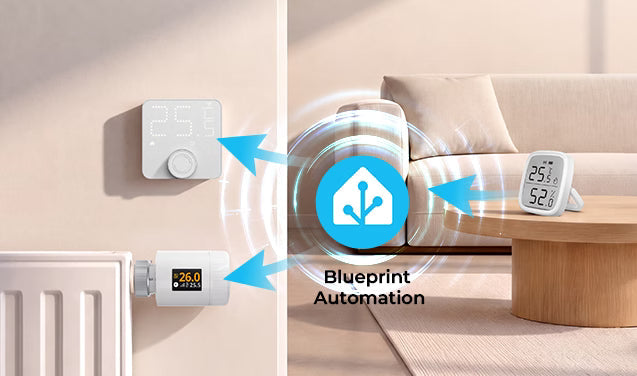
In deze tutorial wordt uitgelegd hoe je een externe temperatuursensor met SONOFF-thermostaatapparaten in Home Assistant gebruikt via een Home Assistant-blauwdruk. Voor verschillende thermostaatapparaten zijn verschillende blauwdruklinks vereist, dus gebruik de blauwdruk die bij jouw apparaat past.
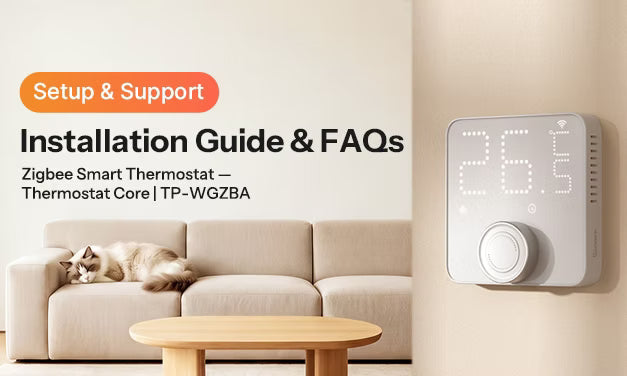
Bij de onderstaande stappen wordt de TP-WGZBA -thermostaat als voorbeeld gebruikt om te laten zien hoe je een externe temperatuursensor configureert met een blauwdruk.
Menunamen kunnen per versie van Home Assistant enigszins verschillen. Volg de opties die in jouw huidige Home Assistant-interface worden weergegeven.
|
Apparaat |
URL van blauwdruk |
|
|
|
|
|
|
👉 Tip: Als je de externe temperatuursensor liever handmatig in Home Assistant configureert, volg dan onze stapsgewijze handleiding voor zowel ZHA als Zigbee2MQTT (Z2M): Een SONOFF TRV handmatig instellen met een externe temperatuursensor
Voordat je begint
Controleer vóór je begint of:
- De externe temperatuursensor is al toegevoegd aan Home Assistant en geeft de temperatuur correct weer.
- De thermostaat of het thermostaatpaneel is succesvol toegevoegd.
- Het apparaat is online.
Stap 1: De blauwdruk importeren
- Open Home Assistant.
- Ga naar Instellingen → Automatiseringen en scènes → Blauwdrukken.
- Klik rechtsonder op Blauwdruk importeren.

4. Plak de bijbehorende URL van de blauwdruk in het veld Adres van blauwdruk .
- De volgende URL is de blauwdruk voor de SONOFF TP-WGZBA-thermostaat:

5. Nadat de blauwdruk succesvol is geïmporteerd, verschijnt deze in de lijst met blauwdrukken.

Opmerkingen:
- Als de blauwdruk niet kan worden geïmporteerd, controleer dan of de URL van de blauwdruk volledig en correct is gekopieerd.
- Als de blauwdruk na het importeren niet verschijnt, vernieuw dan de pagina of start Home Assistant opnieuw.
Stap 2: Een automatisering maken vanuit de blauwdruk
- Ga naar Instellingen → Automatiseringen en scènes → Automatiseringen.
- Klik op + Automatisering maken.
- Kies de blauwdruk voor de externe temperatuursensor die je zojuist hebt geïmporteerd.

4. Selecteer je thermostaatapparaat, zoals het TP-WGZBA-thermostaatpaneel.
5. Selecteer de betreffende externe temperatuursensor die je als externe temperatuursbron wilt gebruiken.

6. Geef de automatisering een naam, bijvoorbeeld: Temperatuur op afstand synchroniseren met TP-WGZBA.
7. Klik op Opslaan.
8. Zorg ervoor dat de automatisering is ingeschakeld.

Opmerkingen:
- Het thermostaatapparaat en de temperatuursensor moeten al aan Home Assistant zijn toegevoegd en online blijven.
- Als je de thermostaat of temperatuursensor niet kunt vinden, controleer dan of het apparaat correct is toegevoegd.
- Controleer na het opslaan van de automatisering of de status ingeschakeld is.
Stap 3: De externe temperatuursensor inschakelen in de apparaatinstellingen
Nadat je de automatisering hebt aangemaakt, moet je ook de externe temperatuursbron op het thermostaatapparaat zelf inschakelen.
Methode 1: ZHA
- Zoek je apparaat SONOFF TP-WGZBA-thermostaat.
- Zoek de schakelaar Externe temperatuursensor en schakel deze in.

Methode 2: Zigbee2MQTT
- Zoek je SONOFF TP-WGZBA-thermostaat.
- Open de instellingenpagina van het apparaat en zoek en selecteer vervolgens Externe temperatuursensor.

Opmerkingen:
- Schakel bij ZHA de schakelaar voor de externe temperatuursbron in.
- Selecteer bij Zigbee2MQTT Externe temperatuursbron.
- Als het apparaat offline is, een bijna lege batterij heeft of een zwak signaal heeft, wordt de instelling mogelijk niet direct toegepast.
- Als je de optie Externe temperatuursensor niet kunt vinden, controleer dan of je ZHA- of Zigbee2MQTT-versie en je apparaatmodel deze ondersteunen.
Stap 4: Zo bevestig je dat de configuratie werkt
Nadat je de bovenstaande stappen hebt voltooid, kun je de configuratie op de volgende manieren bevestigen:
- Zorg ervoor dat de automatisering is aangemaakt en ingeschakeld.
- Zorg ervoor dat de externe temperatuursbron is ingeschakeld of geselecteerd in de apparaatinstellingen.
- Wijzig de door de externe temperatuursensor gemelde temperatuur en controleer of de waarde in Home Assistant of op het apparaat wordt bijgewerkt.
- Controleer of de thermostaat de temperatuur van de externe temperatuursbron gebruikt voor de temperatuurregeling.
- Controleer of de temperatuur zowel op het apparaat als in Home Assistant correct wordt weergegeven.

Laat een reactie achter
Alle reacties worden gemodereerd voordat ze worden gepubliceerd.
Deze site wordt beschermd door hCaptcha en het privacybeleid en de servicevoorwaarden van hCaptcha zijn van toepassing.