









Introduction
Most people do not check the floor around the sump pump, water heater, washing machine, or utility pipes every time they go into the basement. A slow drip behind an appliance or a leaking connection can therefore go unnoticed until water has already spread beyond the source.
A basement water detector can give you an earlier warning, but one sensor on the floor will not necessarily cover the whole basement. A sump pump, water heater, washing machine, exposed plumbing, and HVAC drain can all leak in different places, and water may travel in different directions once it reaches the floor.
Start by identifying where water is most likely to appear. From there, you can decide which areas need individual sensors, whether a detection cable would make more sense for a larger area, and how you want to be alerted if a leak occurs while you are upstairs or away from home.
Best Places to Put Basement Water Detectors
Basement leaks do not always show up directly below the source. Water can run along a pipe, collect in a drain pan, or follow the slope of the floor, so place sensors where water is most likely to travel and collect.
Near the Sump Pump or Sump Pit
Place a sensor on the floor where an overflowing sump pit or leaking discharge connection would send water. If you also want to monitor rising water inside the pit, use a device intended for high-water detection rather than putting a normal floor sensor into the sump. Check-valve and discharge-pipe connections are worth including because they can leak even while the pump is running.
Around the Water Heater
Water heaters are common in basement utility rooms. Place the detector where water from the tank, valve, or plumbing connections would collect—inside a drain pan if one is fitted, or near the base if it is not.
Near a Basement Washer or Utility Sink
If your laundry area is in the basement, check the washer supply hoses, drain connection, utility sink, and standpipe. Put the sensor where a loose hose or overflowing drain would send water onto the floor, while keeping it accessible for testing.
Below Exposed Pipes and Valves
Basements often have exposed plumbing, making pipe joints, shutoff valves, filters, and supply connections practical places to monitor. Put the sensor below the likely drip path, keeping in mind that water may run along a pipe before reaching the floor.
Near HVAC or Dehumidifier Drainage
Condensate drains, pumps, and dehumidifier hoses can release water if they clog, disconnect, or fail. Place the sensor near the drain, pump, or equipment base where water is most likely to collect.
Along Foundation Walls and Known Seepage Areas
If water has entered along a foundation wall or wall-to-floor joint before, start there. Place the detector near the usual entry point or low area where water tends to collect.
Does One Basement Water Detector Cover the Whole Basement?
Usually not. Many basement water detectors are point sensors, so they only react when water reaches the sensing area.
Basement leaks often start in separate places. A sump pump, water heater, washer, and utility sink may all be in the same basement, but water from each one can travel in a different direction. A sensor placed in the middle of the room may not detect a small leak until the water spreads far enough to reach it.
A better approach is to think in risk zones rather than square footage. If several leak sources share the same low point or drain path, one sensor may cover more than one area. If they are separated by walls, thresholds, drain pans, or different floor slopes, they usually need separate monitoring.
For a small basement with only one or two leak-risk areas, one or two well-placed sensors may be enough. Larger utility or laundry areas may need additional sensors or a detection cable.
When a Detection Cable Makes More Sense?
A point sensor works well when you know where water is likely to collect, such as beside a sump pit, under a valve, or inside a water-heater drain pan.
A detection cable is useful when water could appear anywhere along a longer path, for example:
- along a foundation wall with a history of seepage
- behind several appliances in a utility area
- below a run of exposed plumbing
- along the edge of an area where water tends to spread
The SONOFF SNZB-05P supports an optional water detection cable, giving you a longer sensing path when one point sensor is too limited.
The cable still has to come into contact with water. It extends the sensing area, but it does not monitor the entire basement automatically.
What Matters Most in a Basement Water Detector?
Reliable Water Detection
A basement water detector should be able to pick up shallow standing water or slow drips before they spread. Placement matters just as much as sensitivity, since the sensor only works when water reaches the sensing area.
Alerts You Will Actually Receive
A local alarm is useful when someone is home, but basement leaks may go unnoticed if no one is downstairs. Phone notifications or smart-home alerts let you know about a leak while you are upstairs, at work, or away from home.
Smart Home Integration
If you already use a smart-home platform, check how the detector fits into your setup. Home Assistant users should confirm ZHA or Zigbee2MQTT support with their coordinator. For Matter ecosystems, check whether the Zigbee sensor can be exposed through a compatible Matter Bridge rather than assuming the sensor itself is a Matter device.
Reliable Connection in the Basement
Basements can be harder for wireless devices because of concrete, walls, distance from the hub, and nearby metal equipment. Test the sensor in its final location instead of assuming that successful pairing elsewhere in the house means the basement connection will also be reliable.
Battery Life and Maintenance
Leak sensors often sit unattended for long periods, so long battery life and low-battery reporting are useful. Water resistance and easy testing also matter, especially for sensors placed close to sump pits, drain pans, or other damp areas.
Using SONOFF SNZB-05P as a Basement Water Detector
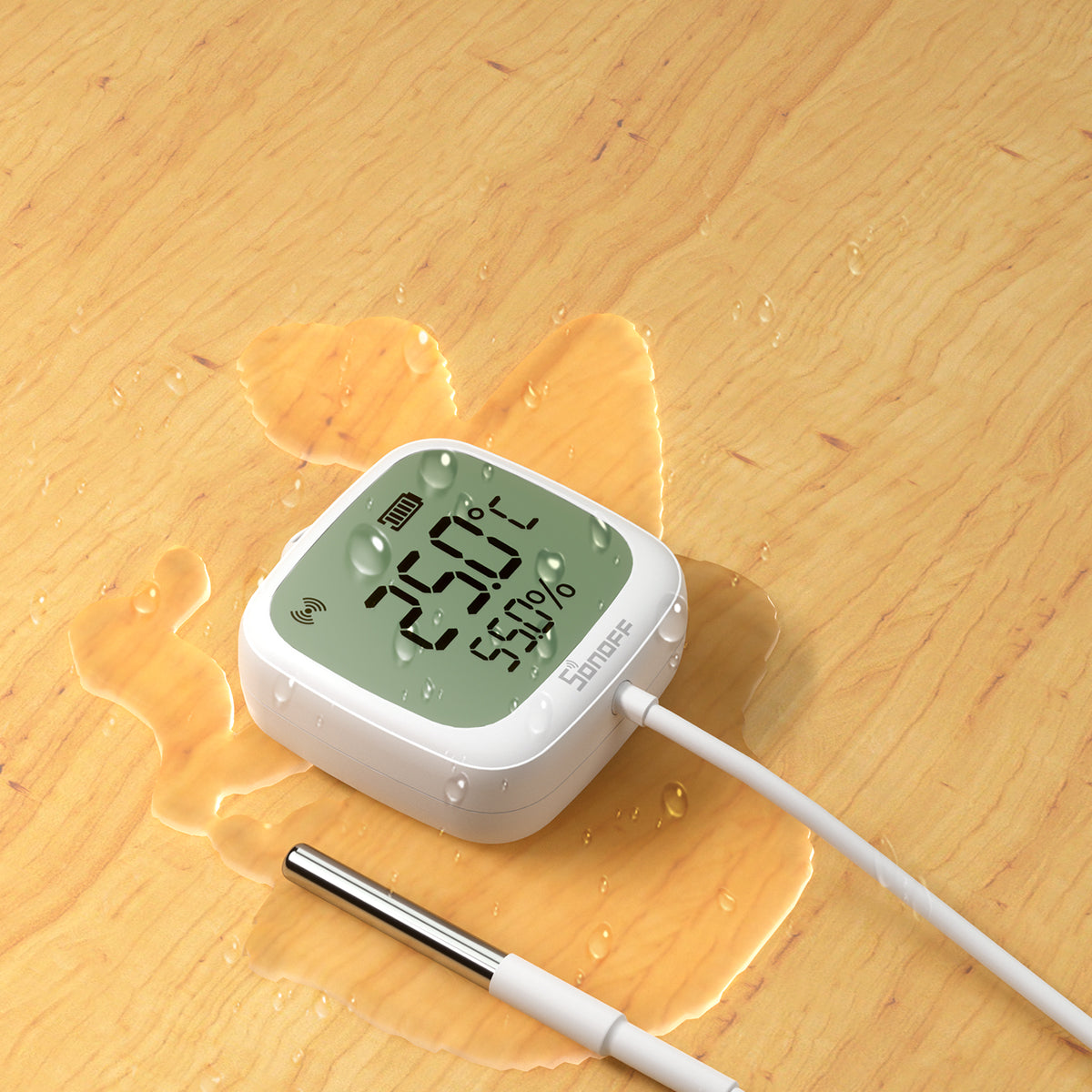
The SONOFF SNZB-05P is a Zigbee 3.0 water leak sensor that fits common basement use cases such as sump areas, water heaters, laundry spaces, and exposed plumbing. Its raised probes can detect liquid levels as low as 0.5 mm, while the concave top surface helps collect and detect slow drips.
- For small, predictable leak points, place the sensor near a sump pit, water heater, washer, utility sink, or below exposed pipe connections. The elevated probe design also allows it to sit on metal surfaces without the surface itself bridging the probes.
- For wider or less predictable leak paths, the SNZB-05P supports optional water detection cables, and multiple cable sections can be connected in series.
The water leak sensor is rated IP67 and uses a CR2477 battery with a stated battery life of up to 5 years under SONOFF's specified test conditions.
With a compatible SONOFF Zigbee gateway and eWeLink setup, the SNZB-05P can send app notifications and trigger a local gateway alarm. For Home Assistant, it supports ZHA or Zigbee2MQTT with a compatible Zigbee coordinator. It can also be brought into Apple Home through a compatible Matter Bridge.
Test Your Basement Water Detector Before You Need It
After installation, test the full alert path — not just whether the sensor appears online.
- Apply a small, controlled amount of water to the sensing area, away from electrical equipment.
- Confirm that the sensor reports a wet state and that the expected phone notification, gateway alarm, or Home Assistant automation runs.
- Test it in its final basement location to make sure the wireless connection remains reliable.
- Dry the sensor or detection cable and confirm that the status returns to normal.
If you use several basement sensors, give each one a clear location name such as Sump Pump, Water Heater, or Basement Washer so an alert immediately tells you where to check.
FAQ
Q1: Where should I place a water sensor in my basement?
Place sensors near the areas most likely to leak, such as the sump pump, water heater, basement washer, exposed pipes, HVAC drainage, and any wall or corner that has leaked before. Follow the path water is most likely to take rather than placing a sensor simply in the middle of the room.
Q2: How many water leak sensors do I need in a basement?
It depends on how many separate leak-risk areas you have. A sump pump, water heater, washer, and utility sink may all need separate monitoring if water from each one would travel in a different direction.
Q3: Can a water sensor tell me if my sump pump fails?
Not directly. A water sensor detects rising or escaped water that may result from a sump pump problem, but it does not diagnose the pump itself.
Q4: Do basement water detectors send alerts to your phone?
Some basic detectors only sound a local alarm, while smart water sensors can send phone notifications through a compatible hub or app. The SNZB-05P supports connected alerts when used with a compatible Zigbee system.
Q5: Can a basement water detector work with Home Assistant or Matter?
Yes, depending on the device and setup. The SONOFF SNZB-05P works with Home Assistant through ZHA or Zigbee2MQTT using a compatible Zigbee coordinator. It can also be exposed to supported Matter ecosystems through a compatible Matter Bridge; the SNZB-05P itself is a Zigbee device, not a native Matter sensor.
👉 For Zigbee-based basement leak monitoring, explore the SONOFF SNZB-05P and optional detection cable.

Laisser un commentaire
Tous les commentaires sont modérés avant d'être publiés.
Ce site est protégé par hCaptcha, et la Politique de confidentialité et les Conditions de service de hCaptcha s’appliquent.